
Running a luxury spa or premium Airbnb in the United States means facing more than just high standards for comfort. Humidity silently undermines even the finest linens, turning crisp towels and robes into breeding grounds for mold and odors if conditions slip above optimal levels. When moisture gets trapped in natural fibers, the effect is more than a nuisance—it disrupts the sensory experience your guests expect. Discover how humidity’s impact on premium linens can shape every stay, and why controlling it protects your reputation for true luxury.
Table of Contents
- Humidity’s Effect on Premium Linens Defined
- Types of Linen Damage from Moisture and Dampness
- How Humidity Influences Guest Comfort and Perception
- Best Practices for Storage and Handling in Humid Climates
- Innovative Solutions for Humidity Control in Hospitality
- Common Mistakes to Avoid When Managing Linens
Key Takeaways
| Point | Details |
|---|---|
| Humidity Control is Critical | Maintaining humidity levels between 40-50% is essential for preserving the quality and longevity of premium linens. Implementing dehumidifiers can prevent microbial growth and ensure guest comfort. |
| Immediate Impact on Guest Experience | High humidity leads to damp linens that can create a perception of poor hygiene, affecting guest satisfaction and reviews. Monitoring humidity levels should be a priority for luxury properties. |
| Proper Linen Handling Practices | Avoid mixing clean and soiled linens and ensure proper storage to prevent mold and fabric damage. Staff training is crucial for maintaining hygiene and linen integrity. |
| Regular Linen Inspections | Conduct frequent inspections of linens for discoloration and odors to maintain a high standard of cleanliness. Timely removal of compromised linens helps uphold luxury perceptions. |
Humidity’s Effect on Premium Linens Defined
When you run a luxury hospitality space, humidity becomes your silent adversary. High moisture levels in the air don’t just make your guests feel uncomfortable—they actively degrade the linens that define your brand experience. Premium linens face a specific vulnerability in humid environments: their natural fibers absorb excess moisture from the air, leading to dampness that compromises both comfort and longevity.
Linen, the cornerstone of luxury bath and spa linens, presents a compelling paradox. Made from flax, linen’s natural absorbency means it excels at moisture management in normal conditions, providing that signature softness guests love. However, when humidity levels climb above 60 percent, this same absorbency becomes problematic. The loose weave that makes linen breathable and comfortable also makes it more susceptible to retaining environmental moisture. Your premium towels and robes absorb that humidity directly from the air, remaining perpetually damp even after laundering. This creates a cascading problem: guests encounter linens that feel clammy rather than crisp, and that first tactile experience shapes their entire perception of your spa or accommodation.
The stakes extend beyond comfort. Excess moisture creates an environment where microbial growth flourishes. Proper humidity control and storage conditions are essential for maintaining hygienic textiles and preventing contamination. When linens retain moisture, they become breeding grounds for mold, mildew, and bacteria—invisible threats that compromise both safety and freshness. Your guests may not see these organisms, but they’ll sense something wrong when they wrap themselves in your robes or bury their faces in your towels. The linens lose their crisp smell, develop that musty undertone, and feel heavier than expected. For luxury establishments, this represents a tangible decline in the sensory experience you’re selling.
Understanding this dynamic changes how you approach linen selection and care. The issue isn’t simply about choosing quality materials. It’s about recognizing that premium linens behave differently in humid environments and require intentional strategies to maintain their performance. When you understand how humidity infiltrates fibers and disrupts the user experience, you can implement targeted solutions that protect your investment and consistently deliver the comfort your guests expect.
Pro tip: Install a hygrometer in your linen storage areas to monitor humidity levels, aiming for 40-50 percent, and pair dehumidification systems with proper ventilation to keep your premium linens fresh and mildew-free between guest uses.
Here’s a summary of how humidity impacts both linen quality and guest experience:
| Humidity Level | Effect on Linens | Guest Experience Impact |
|---|---|---|
| 40-50% (Optimal) | Linens remain crisp, durable | Clean, fresh feel; high comfort |
| 51-60% (Moderate) | Slight risk of dampness | Mild discomfort may occur |
| Above 60% (High) | Mold, odors, fabric damage | Feels clammy, perception of poor hygiene |
Types of Linen Damage from Moisture and Dampness
Moisture damage to premium linens isn’t a single problem. It’s a cascade of interconnected failures that compound over time, each one degrading your linens until they’re no longer suitable for your guests. Understanding these specific damage types helps you recognize problems early and take corrective action before your inventory becomes unusable.
Fabric Weakening and Structural Degradation
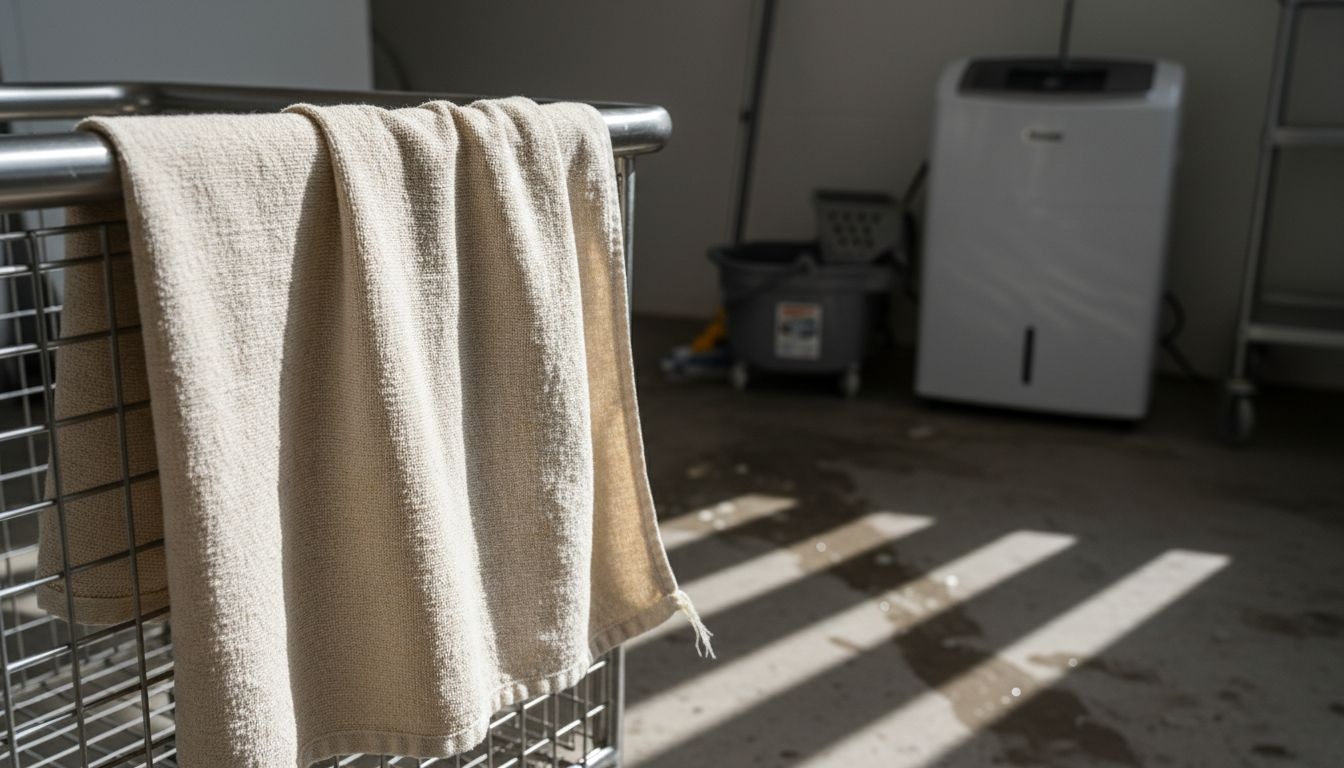
When linens absorb excess moisture, the water infiltrates the fiber structure itself. Persistent moisture weakens fabric integrity by breaking down the cellulose bonds that give linen its strength. Think of it like soaking wood in water—the material becomes soft, loses its rigidity, and becomes prone to tearing during washing and use. Your premium robes and towels begin to feel thin and fragile rather than substantial and luxurious. The threads fray more easily, seams weaken, and what was once a durable textile becomes a liability. For luxury properties, sending out linens that tear or pill after a few guest uses destroys your reputation faster than almost anything else.
Discoloration, Mold, and Odor Issues
Moisture creates the perfect breeding ground for visible and invisible damage. Mold growth on damp linens appears as dark spots or patches that won’t wash out completely. Beyond the unsightly appearance, mold produces that unmistakable musty smell that guests immediately associate with poor cleanliness. Staining from water marks, rust deposits, and mineral accumulation compounds the aesthetic problem. Your pristine white or beautifully colored linens develop yellow, brown, or gray discoloration that makes them look aged and neglected. Even one visibly stained towel in a guest bathroom communicates carelessness and damages the luxury perception you’ve worked hard to build.
Health and Safety Concerns
Perhaps most critically, damp linens harbor mold spores and bacterial colonies that pose genuine health risks. Guests with respiratory sensitivities, asthma, or allergies experience reactions when they use contaminated linens. This isn’t just uncomfortable for them—it’s a liability concern for you. A guest who develops respiratory issues after using your linens may pursue health claims, and you lose the positive reviews that drive bookings. The damage extends to your employees too, who handle damp linens during turnover and face respiratory exposure from repeated mold contact.
Pro tip: Rotate your linen inventory regularly and inspect for discoloration or odor before each use, removing compromised pieces immediately to prevent cross-contamination and maintain your reputation for cleanliness.
How Humidity Influences Guest Comfort and Perception
Your guests arrive expecting a specific sensory experience. They step into the bathroom, reach for a towel, and that first tactile encounter shapes their entire impression of your property. When humidity levels are wrong, you undermine that experience before they even settle in. Humidity doesn’t just affect the linens themselves—it directly influences how your guests perceive comfort, cleanliness, and luxury.
The human body is extraordinarily sensitive to humidity in the environment. Moderate indoor humidity between 40 and 60 percent creates optimal comfort, reducing skin dryness, throat irritation, and respiratory discomfort. When humidity climbs above 60 percent, guests begin experiencing sensations they can’t always articulate but definitely feel. Their skin feels clammy. Hair feels limp. The air itself feels thick and oppressive. For guests paying premium rates at your spa or luxury accommodation, these subtle physical sensations register as low-quality comfort. They may not consciously think, “The humidity is too high.” Instead, they think, “This place doesn’t feel as luxurious as I expected.” That perception translates directly into lower review scores and reduced likelihood of return visits.
The connection runs deeper than ambient air quality. Humidity variations affect thermal sensation and personal comfort zones, meaning your guests unconsciously adjust their expectations based on how the environment feels. In high humidity, people feel warmer than the actual temperature suggests. They make behavioral adjustments—avoiding certain areas, spending less time enjoying amenities, changing clothes more frequently. These micro-behaviors signal discomfort, and discomfort translates into negative sentiment about your property. Your carefully curated spa atmosphere, your meticulously chosen linens, your attention to detail all get overshadowed by the simple fact that the air feels wrong.
Humidity also creates a perception problem around cleanliness. Damp linens smell different than fresh linens, period. Even if your laundry protocols are impeccable, high humidity makes towels and robes retain that slightly off odor that guests associate with dampness and mildew. This perception is extraordinarily powerful. A guest who detects even a hint of mustiness will question whether those linens were properly cleaned, regardless of your actual cleaning standards. They’ll worry about bacteria and mold, spreading negative reviews that damage your business far more than the actual hygiene risk. Perception becomes reality in hospitality, and humidity-compromised linens create a perception problem you cannot afford.
Pro tip: Maintain humidity levels at 45-55 percent year-round and train your staff to immediately replace any linens that feel damp or smell off, prioritizing guest perception over inventory preservation.
Best Practices for Storage and Handling in Humid Climates
Storing premium linens in humid environments requires intentional protocols that go beyond standard linen management. The stakes are high: improper storage in moisture-heavy climates accelerates the damage we discussed earlier, turning your inventory into liabilities rather than assets. The good news is that proven practices can protect your linens and maintain their luxury appeal even in challenging climates.
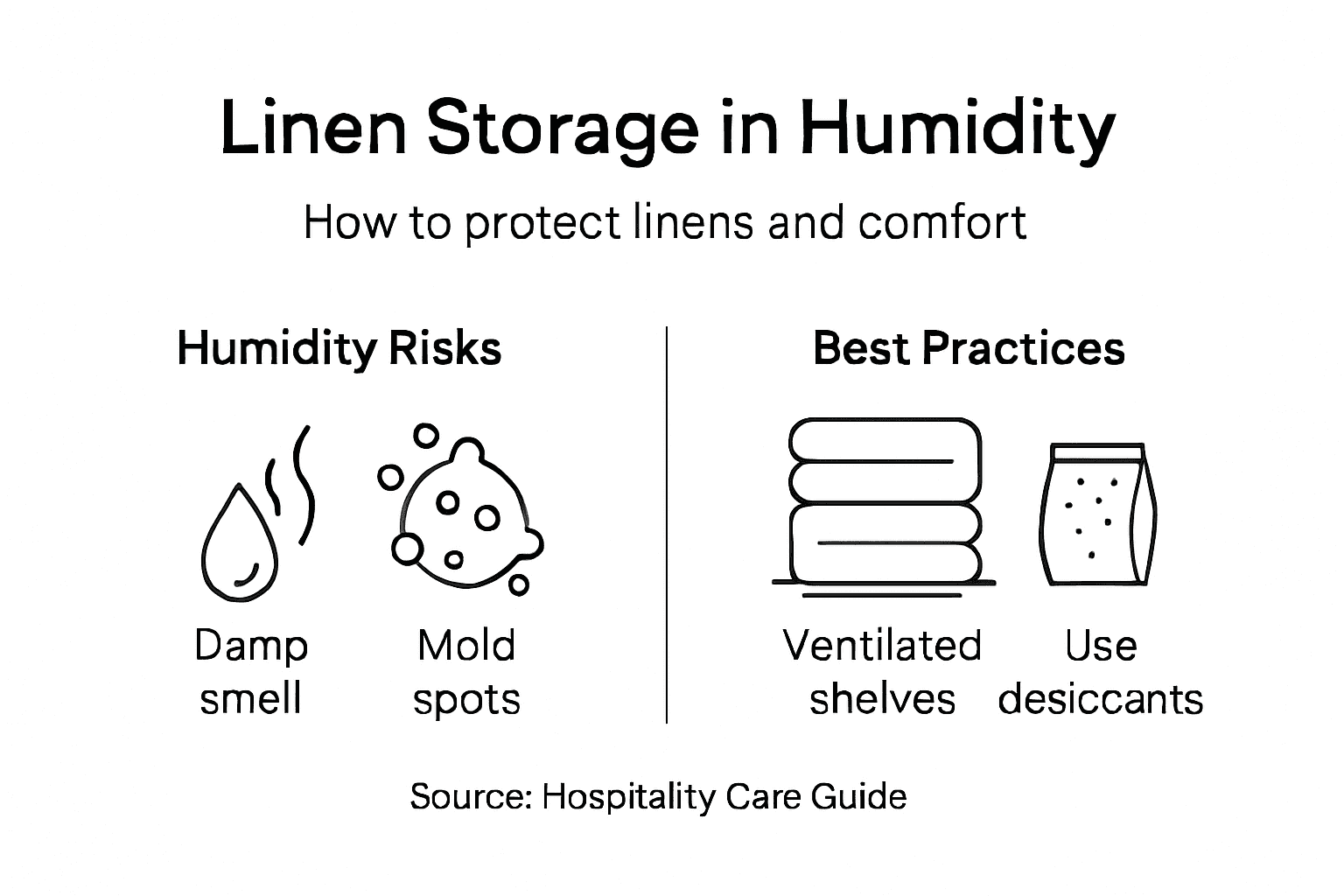
Start with your storage environment itself. Ventilation matters enormously in humid climates. Your linen closets and storage areas need active air circulation, not stagnant, moisture-laden air. Install exhaust fans or dehumidification systems that actively remove moisture rather than simply hoping for airflow. Store linens in breathable containers, not sealed plastic bins that trap humidity inside. Open shelving allows air to circulate around linens, preventing the moisture pockets that form inside enclosed cabinets. Temperature consistency also helps—fluctuating temperatures create condensation that worsens humidity problems. Aim to keep storage areas between 65 and 75 degrees Fahrenheit with humidity levels between 40 and 50 percent. This requires investment in climate control, but the cost of replacing damaged inventory far exceeds the expense of proper environmental management.
Handling and Processing Protocols
How you handle linens during laundering and distribution directly impacts their condition in humid climates. Proper separation of clean and soiled linens and use of leak-proof containers prevents cross-contamination and reduces moisture accumulation. Transport linens in designated, ventilated carts rather than sealed containers that trap humidity. When moving linens between laundry and guest rooms, minimize exposure time in humid hallways and bathrooms. Avoid stacking linens while they’re still warm from the dryer—the internal heat creates condensation as they cool. Wait until linens are completely cool and moisture-free before storing them. Clear separation of clean and dirty linen storage spaces prevents airborne moisture from soiled linens from contaminating fresh inventory.
Implement a rotation system that moves linens quickly from storage to guest use. Long-term storage in humid environments is death for linens. The longer linens sit, the more moisture they absorb from the air. Rotate stock frequently so linens see active use rather than aging in storage. Schedule more frequent laundry cycles in humid seasons to keep turnover high. Train your staff to inspect linens immediately upon removal from storage and again before placing them in guest rooms. Any sign of dampness or off-odor means the linen goes to laundry, not to a guest. This vigilance protects both your reputation and your guests’ experience.
Pro tip: Use silica gel packets or rechargeable desiccant containers in your linen storage areas to actively absorb ambient moisture, replacing or regenerating them weekly in peak humidity seasons.
Innovative Solutions for Humidity Control in Hospitality
You don’t have to accept humidity as an unchangeable fact of your climate. Modern solutions exist to manage moisture levels actively, and many are far more affordable than you might expect. The key is understanding what’s available and matching the right technology to your specific property type and humidity challenges.
Smart HVAC Modifications and Dehumidification Systems
Your existing HVAC system is likely your first line of defense, but it may need optimization. Advanced HVAC humidity control solutions tailored for hot-humid climates offer cost-effective equipment modifications that significantly improve moisture management without requiring complete system replacement. Many older HVAC systems cool air without adequately removing humidity, especially in peak seasons. Upgrading to units with dedicated dehumidification capability or adding supplemental dehumidifiers to your ductwork provides targeted moisture removal. Variable refrigerant flow systems adjust cooling capacity more precisely, maintaining optimal humidity without over-cooling your spaces. The upfront investment typically pays for itself within two to three years through reduced linen replacement costs and fewer guest complaints.
For luxury Airbnb properties and smaller spas, portable or wall-mounted dehumidifiers in critical areas like laundry rooms, linen storage, and guest bathrooms offer practical solutions without major renovations. Desiccant dehumidifiers work better than refrigerant models in cooler seasons when condensing dehumidifiers lose effectiveness. Position units strategically where linens are stored and in areas with poor air circulation. Monitor performance with hygrometers positioned at different heights, since humidity varies throughout a room.
Building Envelope and Passive Controls
Beyond mechanical systems, your building’s physical structure matters significantly. Effective humidity control measures include HVAC strategies, mechanical and passive controls, and building envelope considerations to maintain optimal moisture levels. Improve ventilation in bathrooms where guest showers generate massive amounts of steam. Install high-capacity exhaust fans that run continuously or on timers, venting moisture directly outside rather than into hallways and adjacent spaces. Seal air leaks around windows and doors that allow humid outside air to infiltrate. In coastal or tropical climates, consider installing radiant barriers or reflective roof coatings that reduce solar heat gain and subsequent cooling demand.
Passive solutions matter too. Maintain adequate air gaps between your building exterior and interior insulation to prevent moisture trapping. Use breathable paint finishes rather than heavy vapor barriers in linen storage areas. Ensure gutters and downspouts function properly to prevent water infiltration that creates localized humidity zones. These foundational improvements work alongside mechanical systems to create truly effective moisture management.
Monitoring and Adaptive Management
Implement a monitoring system that gives you real-time visibility into humidity levels throughout your property. Smart hygrometers connected to your facility management system alert you when humidity climbs above your target range, allowing immediate intervention. This prevents silent damage where high humidity exists for days undetected before affecting your linens. Data from these systems also helps you identify specific problem areas—perhaps a guest bathroom or storage corner where humidity consistently runs high despite general facility control.
Pro tip: Invest in a central humidity monitoring system that integrates with your HVAC controls, automatically triggering dehumidification or ventilation when humidity exceeds 55 percent, creating consistent environmental conditions without manual oversight.
Below is a comparison of active and passive humidity control solutions for hospitality:
| Solution Type | Example Technology | Cost Effectiveness | Maintenance Level |
|---|---|---|---|
| Active (Mechanical) | Dehumidifiers, Smart HVAC Systems | High initial cost | Requires regular service |
| Passive (Structural) | Ventilation, Radiant Barriers | Moderate investment | Minimal after installation |
Common Mistakes to Avoid When Managing Linens
Even well-intentioned hospitality operators make critical mistakes in linen management that directly undermine their investment in premium inventory. These aren’t obscure errors. They’re common practices that feel efficient but actively damage your linens and compromise guest safety. Understanding what not to do is sometimes more valuable than knowing what to do.
Improper Handling During Processing and Transport
The moment linens leave a guest room begins a cascade of potential damage. One of the most damaging mistakes is shaking or agitating soiled linens during collection and transport. This seems counterintuitive until you understand the science. When you snap or shake contaminated linens, you aerosolize bacteria and mold spores, spreading them throughout your laundry area and onto clean linens nearby. In humid environments, this cross-contamination becomes exponentially worse because the moisture helps these organisms proliferate. Improper handling such as shaking linens causes contamination and elevates risks of microbial growth and infection transmission, especially in moisture-prone spaces. Always place soiled linens directly into designated, sealed containers without agitation. Your staff should never carry soiled linens against their body, which transfers contamination to their clothing and hands, spreading it to clean linens later.
Another critical error is mixing clean and soiled linens during any stage of the workflow. This happens more often than you’d think, especially when staff rush during peak turnover times. Soiled linens must have completely separate storage containers, transport routes, and handling procedures from clean inventory. The physical separation prevents cross-contamination and reduces the likelihood of damp, contaminated linens somehow making their way into guest rooms. In humid climates, moisture from soiled linens can actually travel through the air and settle on nearby clean inventory, accelerating mold growth.
Storage and Environmental Control Failures
Critical control points where contamination risks arise occur at storage, transportation, and delivery stages, with frequent mistakes including improper containment and lack of environmental controls. Many operators store linens in sealed plastic containers or cramped closets without ventilation, not realizing they’re creating perfect humidity traps. As linens absorb moisture from the air and from residual dampness in the fibers, that moisture becomes trapped inside sealed containers. Within days, mold begins growing invisibly. You don’t discover the problem until guests complain about musty smells or visible discoloration appears.
Failing to monitor humidity levels in storage areas is equally damaging. You can’t manage what you don’t measure. Without hygrometers tracking moisture, you’re operating blind. High humidity silently degrades your inventory week after week. By the time you notice problems, significant damage has occurred.
Inadequate Personal Protective Equipment and Hygiene
Your staff handling contaminated linens must use appropriate protective equipment, including gloves, masks, and in some cases gowns. Skipping this step exposes employees to health risks and increases the likelihood of cross-contamination. Hand hygiene between handling soiled and clean linens prevents microscopic contamination transfer. This seems basic, but time pressure during busy shifts leads staff to cut corners. Train your team that PPE and hand hygiene aren’t optional suggestions. They’re non-negotiable requirements that protect both employee health and linen integrity.
Pro tip: Create a pre-shift checklist that your staff completes before touching any linens, verifying proper PPE is worn, humidity levels are acceptable, and soiled linens are properly contained and separated from clean inventory.
Protect Your Guests’ Comfort with Premium Linens Designed for Humidity Challenges
Humidity can silently damage your linens and disrupt the luxurious experience your guests expect. With moisture weakening fabric fibers and causing damp odors, finding bath and spa essentials that withstand humidity is key to preserving both safety and comfort. At Lotus Linen, we understand the importance of breathable, durable, and elegant robes and towels that maintain freshness even in challenging environments.

Experience the difference with our premium collection of plush and waffle robes crafted for all family members. Our linens combine aesthetic elegance with moisture-managing properties to help you combat mustiness and fabric degradation. Don’t let humidity undermine your guest satisfaction. Visit Lotus Linen today to explore customizable options and invest in linens engineered for lasting comfort and hygiene.
Frequently Asked Questions
What humidity levels are optimal for storing premium linens?
Maintaining humidity levels between 40-50% is optimal for storing premium linens, as this range helps keep them crisp and durable.
How does high humidity affect linen quality and guest experience?
High humidity above 60% can cause linens to retain moisture, leading to dampness, odors, and fabric damage, which negatively impacts guest comfort and perceived cleanliness.
What are some strategies to prevent humidity-related damage to linens?
Implement proper ventilation, use dehumidification systems, monitor humidity levels with hygrometers, and ensure linens are stored in breathable containers to prevent moisture accumulation.
Why is the first tactile experience with linens important for guests?
The initial feel of linens significantly shapes guests’ perceptions of comfort and luxury; damp or musty linens can lead to negative sentiments that affect overall satisfaction.
Recommended
- Choosing Robes for Guests: Create Comfort and Style – Lotus Linen
- Impact of Linens on Reviews for Hotels and Spas – Lotus Linen
- White vs Colored Towels: Impact on Family Wellness – Lotus Linen
- How to Choose Bath Towels: Selecting the Perfect Luxe Towels – Lotus Linen
- Common Laundry Mistakes: Complete Guide to Clothes Care | Simple Neat Home

