
Stepping outside for a lake stroll or preparing for a spa day, heat can quickly turn self-care into discomfort. Staying cool while prioritizing luxury is more than a simple towel choice—it means embracing science-backed solutions. Today’s cooling towel designs deliver relief through evaporative cooling, harnessing natural heat transfer to keep your skin refreshed without sacrificing style or comfort. Discover the latest materials and technologies that let you move confidently from pilates class to outdoor brunch, all while enjoying lasting comfort tailored for American wellness routines.
Table of Contents
- What Makes A Towel A Cooling Towel
- Types Of Cooling Technologies And Materials
- How Cooling Towels Work In Outdoor And Spa Settings
- Safety, Care, And Common Misconceptions
- Comparing Cooling Towels With Alternative Solutions
Key Takeaways
| Point | Details |
|---|---|
| Cooling Towels Use Evaporative Cooling | They absorb moisture and release it efficiently, pulling body heat away for a sustained cooling effect. |
| Material Matters for Performance | High-quality options like microfiber blends or phase change materials enhance cooling efficiency and durability. |
| Environment Affects Effectiveness | Cooling towels perform best in dry conditions; humidity can diminish their cooling capabilities. |
| Proper Care Extends Lifespan | Regular washing and correct storage prevent bacterial growth and maintain the towel’s effectiveness. |
What Makes a Towel a Cooling Towel
A cooling towel isn’t magic—it’s engineered science working in your favor. Unlike your standard bath towel, a cooling towel operates through a specific combination of fabric composition and moisture management that creates a sustained cooling effect on your skin. The magic centers on evaporative cooling, where the towel’s specially designed fibers absorb moisture and then release it efficiently, pulling body heat away as part of the evaporation process. This isn’t just about being damp; it’s about being strategically damp in a way that maximizes heat transfer while keeping the towel itself dry enough to be comfortable against your skin.
The fabric structure is what separates a cooling towel from a regular one. High-quality cooling towels use synthetic microfiber blends or specialized cotton weaves engineered for rapid moisture absorption and quick evaporation. When you wrap a cooling towel around your shoulders after a hot yoga session or drape it across your neck during a garden party, principles of heat transfer work immediately. Your body heat transfers to the damp fabric, and as that moisture evaporates from the surface, it creates a continuous cooling cycle. The towel’s surface area matters too—more fabric means more evaporative surface, which is why larger cooling towels typically deliver more noticeable results than smaller ones. The key is that the material must stay absorbent enough to draw moisture from your skin but breathable enough that evaporation happens continuously rather than the towel just staying soggy.
What really matters for women managing outdoor activities and wellness routines is durability paired with performance. A quality cooling towel maintains its cooling properties through repeated use and washing, which is where material quality becomes non-negotiable. You’ll want towels that don’t lose their texture, color fastness, or absorption capacity after just a few months. Choosing towels that withstand frequent use while maintaining their functional properties ensures you’re investing in something that actually lasts. The cooling towel you purchase today should still deliver that refreshing sensation next summer, not fall apart or lose its beneficial properties.
Pro tip: Activate your cooling towel by soaking it in cool water for 5-10 minutes, then wringing out excess water until it’s damp but not dripping—this primed state maximizes evaporative cooling and gives you the fastest temperature drop when you need it most during outdoor activities.
Types of Cooling Technologies and Materials
Cooling towel technology has evolved far beyond simple moisture absorption. Today’s market offers several distinct material and technology approaches, each with its own strengths depending on your lifestyle and outdoor activities. The most common traditional option uses microfiber blends, which excel at rapid moisture absorption and quick evaporation cycles. These synthetic materials are lightweight, quick-drying, and affordable, making them accessible for everyday use. However, if you prefer natural fibers, specialized cotton weaves engineered for enhanced breathability and moisture management offer a more luxurious feel while still delivering reliable cooling performance. Both options work through evaporative cooling, but the choice often comes down to personal preference between synthetic convenience and natural comfort.
The real innovation is happening with advanced materials that go beyond traditional evaporation. Phase change materials (PCMs) represent a significant leap forward—these are incorporated into towel fabrics to actively absorb your body heat and store it, then gradually release that heat away from your skin. This creates a more sustained cooling effect compared to standard evaporative towels, particularly valuable during intense outdoor activities or extended time in the sun. Another emerging technology uses radiative cooling coatings that help towels reflect solar radiation rather than absorbing it, keeping the fabric itself cooler and extending the cooling sensation. Researchers have also developed chalk-based coatings applied to cotton and synthetic fabrics, which are highly reflective and environmentally benign while enhancing your towel’s cooling capacity without complex manufacturing processes.
For women juggling wellness activities, outdoor travel, and spa experiences, understanding these technology options helps you choose the right towel for your specific needs. If you’re primarily using your cooling towel for post-workout recovery or yoga sessions, a quality microfiber option delivers excellent performance at an accessible price point. But if you’re investing in luxury wellness experiences or spending extended hours outdoors in peak heat, phase change materials or advanced coatings justify the higher investment through superior and longer-lasting cooling performance. The durability of these advanced technologies also matters—coatings need to withstand repeated washing without degrading, and phase change materials should maintain their effectiveness for years, not months.
Pro tip: Match your towel technology to your primary use case: choose microfiber for convenience and quick drying, select phase change materials if you need extended cooling during long outdoor activities, and consider advanced coatings if environmental sustainability and reflective cooling are priorities for your wellness routine.
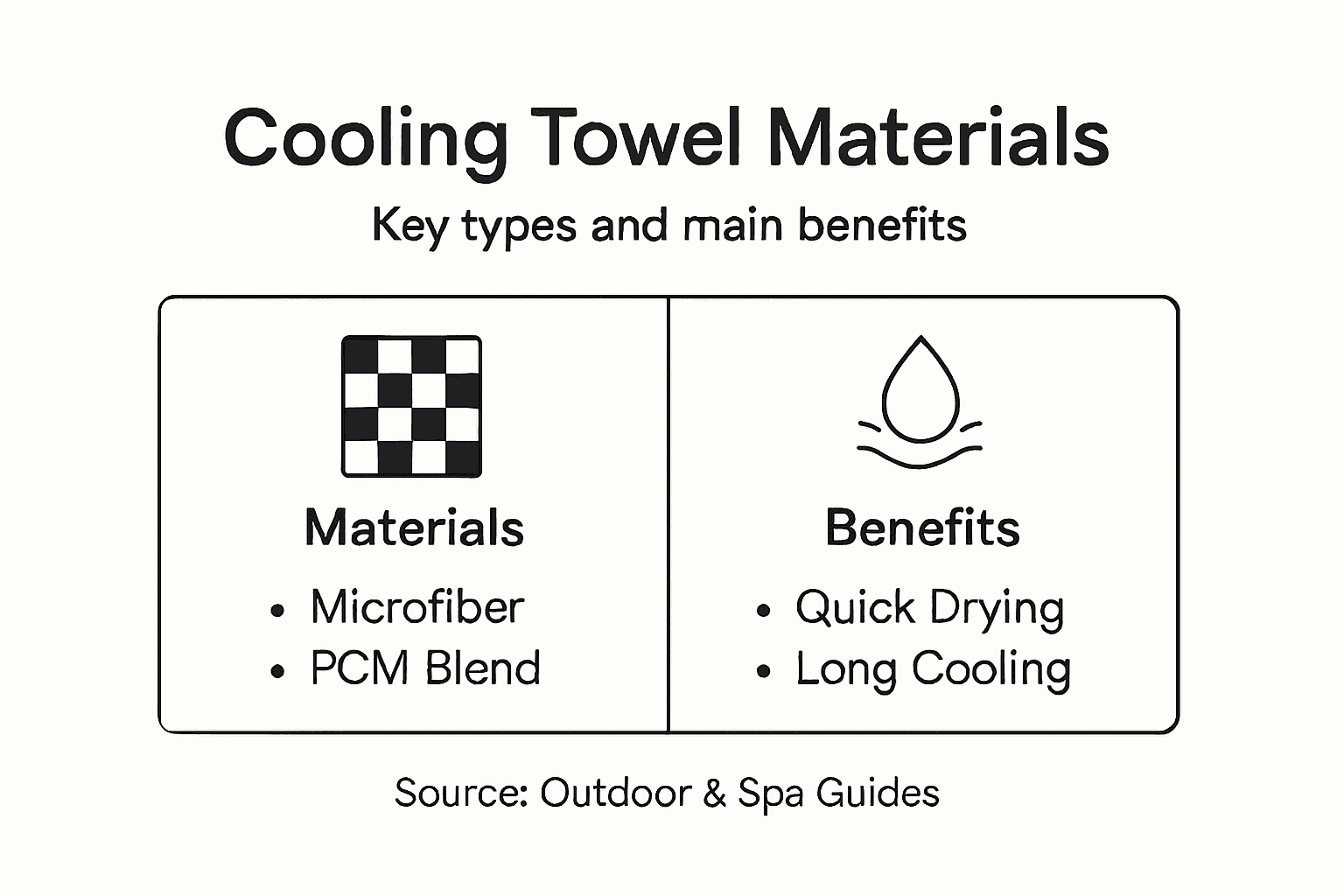
Here’s a concise comparison of cooling towel technologies and their key benefits:
| Technology Type | Primary Cooling Mechanism | Typical Use Case | Notable Advantage |
|---|---|---|---|
| Microfiber Blends | Rapid evaporative cooling | Post-workout, everyday use | Lightweight and affordable |
| Specialized Cotton | Enhanced moisture management | Spa, luxury wellness | Luxurious feel and comfort |
| Phase Change Material | Absorbs and stores body heat | Extended outdoor activities | Prolonged cooling performance |
| Radiative Coatings | Reflects solar radiation | Hot weather, environmental focus | Cooler fabric in direct sunlight |
| Chalk-Based Coatings | Highly reflective, eco-friendly | Outdoors, sustainability focus | Environmentally benign cooling |
How Cooling Towels Work in Outdoor and Spa Settings
Cooling towels perform very differently depending on where you use them, and understanding these environments helps you maximize their effectiveness. In outdoor settings, your cooling towel becomes a personal climate control system that works with nature rather than against it. The towel absorbs moisture from your skin or water you’ve applied to it, then that moisture evaporates into the surrounding air. This evaporation process pulls thermal energy away from your body, creating that refreshing sensation you feel when you wrap a damp cooling towel around your shoulders on a hot day. However, outdoor performance depends heavily on environmental conditions. On a humid afternoon, evaporation slows because the air is already saturated with moisture, so your cooling towel won’t feel quite as effective as it does on a dry, breezy day. Similarly, direct sun exposure and air circulation matter—a breeze accelerates evaporation and keeps the cooling cycle continuous, while still air allows moisture to remain but slows the heat transfer.
In spa settings, cooling towels work within a completely different framework that amplifies their therapeutic benefit. Spas leverage alternating heat and cooling phases to enhance your body’s recovery and relaxation response. After a hot yoga session or facial, a cooling towel applied to your neck, shoulders, or face immediately counteracts the heat stress your body experienced. This contrast between heat and cooling isn’t random—it’s a deliberate wellness strategy that promotes circulation, reduces inflammation, and creates a deeply restorative experience. The controlled environment of a spa means humidity and temperature are managed, which actually optimizes cooling towel performance compared to unpredictable outdoor conditions. Your skin is often primed and more receptive after heat exposure, making the cooling sensation more pronounced and therapeutic.
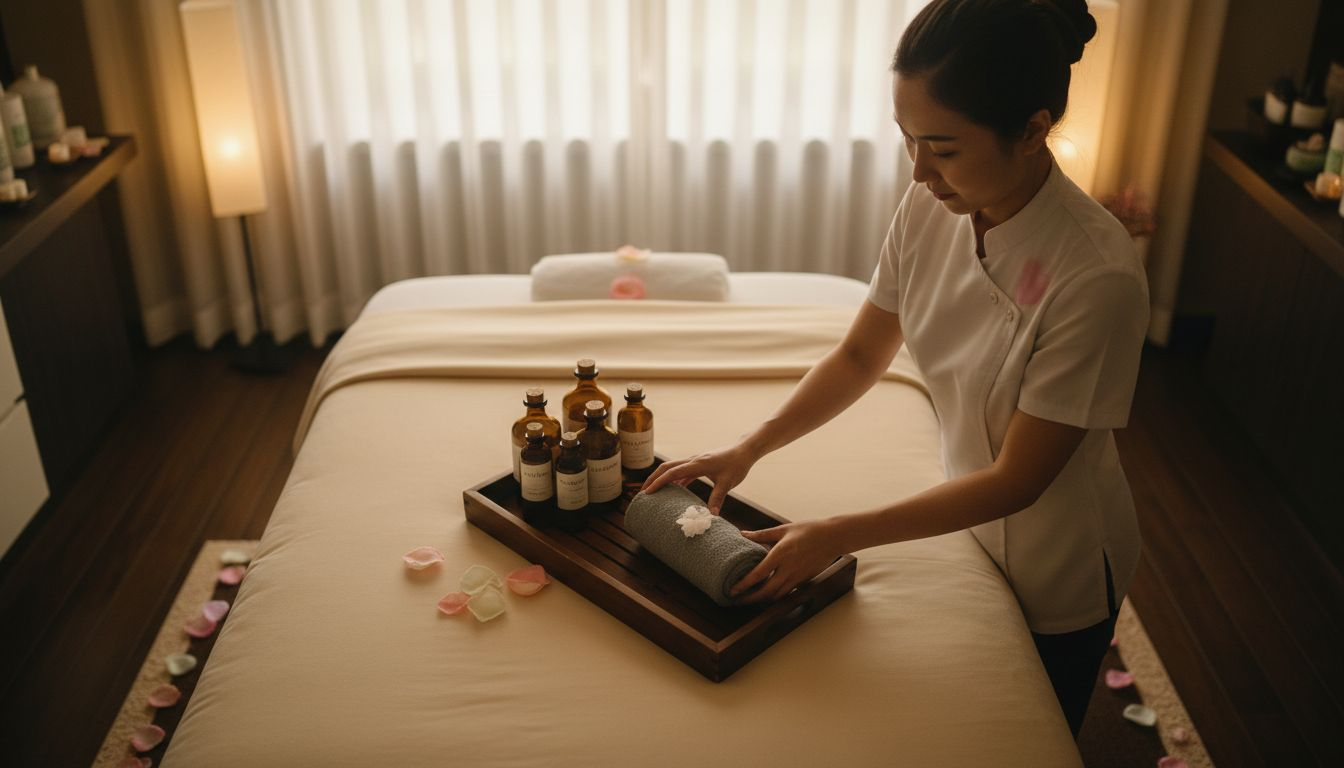
What makes cooling towels so valuable for your lifestyle is their versatility across both environments. At the beach or during outdoor travel, you’re managing variable conditions and need a towel that adapts to changing humidity and temperature. In spa and wellness settings, you’re working with controlled conditions specifically designed to maximize the therapeutic cooling effect. When selecting the right towel for your primary use case, consider where you’ll spend most of your time. If you’re frequently outdoors, prioritize towels with excellent moisture absorption and quick evaporation. If spa and wellness experiences are your focus, look for towels engineered specifically for sustained cooling in controlled environments where they’ll deliver maximum therapeutic benefit.
Pro tip: Before heading to the beach or outdoor event, pre-soak your cooling towel in cool water for 10 minutes, then wring it until it’s damp but not dripping—this ensures maximum evaporative cooling in outdoor conditions where you can’t easily re-wet it throughout the day.
Safety, Care, and Common Misconceptions
Cooling towels are wonderfully safe when used properly, but a few practical considerations matter for both your skin health and your towel’s longevity. The biggest safety concern is bacterial growth from prolonged dampness. If you leave your cooling towel wet and bundled in a gym bag or beach tote for hours, you’re creating an ideal environment for bacteria and mold to flourish. This can lead to skin irritation, unpleasant odors, and reduced towel effectiveness. Always rinse your towel with fresh water after use and hang it to dry completely in a well-ventilated area. Washing your cooling towel regularly in your washing machine with mild detergent keeps it hygienically clean. Most quality cooling towels are designed to withstand frequent washing without losing their performance properties, but check your specific towel’s care instructions. The key is treating it like any other luxury textile in your home, not tossing it in a corner damp and forgotten.
One widespread misconception is that cooling towels provide unlimited, indefinite cooling. They don’t. Your cooling towel works by evaporating moisture, and once that moisture is gone, the cooling effect stops. If you’re spending an entire afternoon at the beach, you’ll need to periodically re-wet your towel to maintain the cooling sensation. Another myth is that they work equally well in all conditions. High humidity dramatically reduces evaporative cooling, so on a sticky, muggy day, your towel won’t feel as refreshingly cool as it does on a dry, breezy day. This is physics, not a product failure. Some people also mistakenly use cooling towels in extreme cold weather, thinking they’ll provide warming. They won’t. In cold conditions, prolonged dampness can actually contribute to cold stress, so keep your cooling towel dry and save it for warm weather use. Your cooling towel is a seasonal tool, not a year-round solution.
Proper storage and maintenance extend your towel’s life significantly. Store your cooling towels in a clean, dry place away from direct sunlight, which can fade colors and degrade synthetic fibers over time. If your towel begins losing its absorbency or cooling effectiveness after repeated use, it may be time to replace it. Quality cooling towels typically maintain optimal performance for 2-3 years with proper care, making them a solid investment in your wellness routine. Pay attention to any changes in texture, colorfastness, or how the towel feels against your skin. These are signs that the towel has reached the end of its useful life. Don’t push a degraded towel into continued service—it simply won’t deliver the cooling benefits you expect, and you deserve better.
Pro tip: Wash your cooling towel separately from your regular laundry using cold water and skip fabric softener, which can reduce absorbency; then air dry it completely before storing to prevent mildew and keep it ready for your next outdoor adventure or spa visit.
Comparing Cooling Towels With Alternative Solutions
When it comes to staying cool outdoors, cooling towels compete with several other solutions, each with distinct advantages and limitations. The most obvious alternative is air conditioning, but that only works indoors or in your car, making it irrelevant for beach days, hiking trips, or outdoor wellness activities. Portable fans offer active cooling through air circulation but consume battery power and aren’t particularly effective in still air or extremely hot conditions. Cold water bottles or ice packs provide localized cooling but can be uncomfortable against bare skin, and they gradually warm up throughout the day. Cooling vests with built-in ice packs or gel inserts deliver more comprehensive body cooling but are bulky, heavy, and impractical for most outdoor activities. The biggest advantage cooling towels hold over these alternatives is simplicity. No batteries required. No ice to melt. No bulky equipment. Just a compact, lightweight textile that you can toss in a beach bag and activate with water from nearly any source.
To help guide your choice, here is a summary of how cooling towels compare to common alternatives:
| Solution | Power Required | Portability | Cooling Duration |
|---|---|---|---|
| Cooling Towel | None | Very portable | Rewet as needed |
| Portable Fan | Batteries | Moderately small | While batteries last |
| Cold Water Bottle | None | Easy to carry | Limited; warms quickly |
| Cooling Vest | None/Batteries | Bulky | Long, but less convenient |
| Air Conditioning | Electricity | Not portable | Unlimited indoors |
When comparing effectiveness, context matters enormously. Cooling towels excel for outdoor workers, athletes, and anyone spending extended time in warm weather because they’re low-energy, portable solutions that don’t depend on electricity or complex infrastructure. However, they’re not ideal for extreme heat conditions where you need sustained, full-body cooling. In those situations, access to air conditioning or specialized cooling garments becomes essential for safety. Emerging technologies like radiative cooling textiles and phase change materials offer interesting alternatives that work through different mechanisms than evaporative cooling. Radiative cooling materials passively emit heat as infrared radiation, making them effective even in humid conditions where evaporative cooling falters. Phase change materials absorb heat when you’re warm and release it when you cool down, creating automatic temperature regulation. These advanced options provide superior performance in specific situations but cost significantly more and remain less widely available than conventional cooling towels.
For your lifestyle as a health-conscious woman managing outdoor activities and spa experiences, cooling towels likely represent the best balance of practicality, affordability, and performance. They’re not perfect for every scenario, but they’re perfect for most situations you’ll encounter. Pair a quality cooling towel with smart habits—staying hydrated, wearing light-colored clothing, and seeking shade when possible—and you’ve built a comprehensive approach to outdoor comfort. If you’re investing in multiple cooling solutions for different purposes, start with a high-quality cooling towel as your foundation. It’s versatile, reliable, and genuinely effective. Add specialized solutions only if your specific activities demand it. The most luxurious approach to outdoor wellness combines accessibility with effectiveness, which is exactly what a well-engineered cooling towel delivers.
Pro tip: Layer your cooling strategies by using a cooling towel for immediate relief while also staying hydrated and wearing breathable fabrics; this combination maximizes comfort and safety far better than relying on any single cooling solution alone.
Elevate Your Outdoor Comfort with Premium Towels from Lotus Linen
The challenge of staying cool and comfortable outdoors often means relying on a cooling towel that performs without fail through heat, humidity, and activity. As the article explains, maximizing evaporative and advanced cooling technologies is key to fighting heat stress and enhancing wellness. At Lotus Linen, we understand your goals to combine luxury, durability, and effective moisture management in every textile you use. That is why our towels and spa accessories are crafted with attention to quality and comfort, making them ideal companions for both outdoor adventures and relaxing spa moments. Incorporate our plush and waffle towel collections into your routine and experience fabric engineered to maintain texture, colorfastness, and absorbency even after repeated use.

Discover how the right towel can transform your wellness routine by visiting Lotus Linen today. Explore our full range of customizable robes and towels for women, men, and families designed for lasting performance and aesthetic elegance. Don’t wait for another hot day to be uncomfortable. Embrace the blend of style and science now by selecting your perfect cooling companion at Lotus Linen. Enhance your outdoor and spa experiences with textiles that truly understand your needs and deliver consistent comfort every time.
Frequently Asked Questions
What is a cooling towel and how does it work?
A cooling towel is a specially engineered textile designed to provide a sustained cooling effect through evaporative cooling. It absorbs moisture from your skin or water, and as that moisture evaporates, it pulls heat away from your body, creating a refreshing sensation.
What materials are commonly used in cooling towels?
Cooling towels typically use synthetic microfiber blends for rapid moisture absorption and quick evaporation. Some also feature specialized cotton weaves or advanced materials like phase change materials (PCMs) that actively absorb and release body heat for extended cooling.
How should I care for my cooling towel to ensure its longevity?
To maintain your cooling towel, rinse it with fresh water after use, and hang it to dry completely in a well-ventilated space. Wash it regularly with mild detergent in cold water, avoiding fabric softeners, to preserve its absorbency and performance.
Why is the cooling effect of a towel reduced in humid conditions?
In humid environments, the air is already saturated with moisture, which slows evaporation. As evaporation is the primary cooling mechanism, a cooling towel won’t feel as effective in high humidity compared to dry conditions, where heat transfer and moisture evaporation occur more efficiently.
Recommended
- 7 Expert Tips for Smart Children’s Towel Choices – Lotus Linen
- How to Choose Bath Towels: Selecting the Perfect Luxe Towels – Lotus Linen
- Robe Trends for Men 2025: Stylish Comfort for Every Lifestyle – Lotus Linen
- White vs Colored Towels: Impact on Family Wellness – Lotus Linen
- 7 Plant-Based Beauty Examples for Sensitive Skin Relief – Pure Light Botanical Beauty

