
Cotton and bamboo towels can look almost identical on a store shelf, but they are made very differently and the labels can be misleading. Before you choose, it helps to know what each material actually is, how the finished towel tends to feel and perform, and where the real trade-offs lie. This guide compares them honestly on the things that matter in daily use: feel, moisture handling, drying, care, and longevity.
Table of Contents
- What Cotton And Bamboo Towels Actually Are
- Feel, Absorbency, And Drying
- Care, Durability, And Trade-Offs
- Which Towel Is Right For You
Quick Summary
| Takeaway | Explanation |
|---|---|
| "Bamboo" usually means viscose | Most bamboo towels are rayon or viscose regenerated from bamboo pulp, or a bamboo-cotton blend, so the label describes the raw source, not the finished performance. |
| Cotton is a proven all-rounder | Cotton is spun and woven directly into towels that are highly absorbent, plush, and able to handle frequent washing. |
| Construction beats the label | Fiber quality, weave, weight (GSM), and finishing determine how a towel feels and lasts more than the plant it started as. |
| Care needs differ | Cotton tolerates regular washing and warmer drying; bamboo-viscose fabrics generally need gentler care. |
| Judge the towel, not the marketing | Feel the weight and pile, check the fiber content, and match it to how you actually use your towels. |
What Cotton and Bamboo Towels Actually Are
Cotton towels are made from natural cotton fibers. The fibers are harvested, ginned to remove seeds, cleaned, spun into yarn, then woven into the looped terry that gives a towel its absorbency. Longer-staple cotton and low- or zero-twist yarns make a softer, loftier towel, and finishing steps shape the final texture and weight. Because cotton is used more or less as it grows, the fiber in the towel behaves the way natural cotton behaves: absorbent, plush, and durable through repeated washing.
"Bamboo" towels are a different story. A small number are made from mechanically processed bamboo (sometimes called bamboo linen), but the vast majority sold as "bamboo" are actually rayon or viscose a fiber made by chemically dissolving bamboo pulp and regenerating it into filament. Many are also bamboo-cotton blends. That distinction matters: once the plant is dissolved and reformed, the finished fabric behaves like other viscose fabrics, not like raw bamboo.
This is why the word "bamboo" on a label tells you less than you might think. It describes the raw material, not how the towel will feel, absorb, or hold up. Popular claims tied to the raw plant such as being naturally antibacterial or automatically eco-friendly do not reliably carry over once the bamboo has been chemically processed into viscose, so it is worth treating those marketing lines with a healthy skepticism. What actually predicts performance is fiber type, weave, weight, and finishing.
The table below breaks down how each is made.
| Step | Cotton Towel | "Bamboo" Towel (typical) |
|---|---|---|
| Raw Material | Cotton fibers, harvested and ginned | Bamboo stalks, pulped for cellulose |
| Fiber Preparation | Cleaned and spun as a natural fiber | Usually chemically dissolved and regenerated into viscose/rayon |
| Yarn & Weave | Spun into yarn; woven into looped terry | Regenerated fiber spun into yarn, often blended with cotton |
| Finished Fabric | Behaves like natural cotton: absorbent, plush | Behaves like viscose: smooth, soft drape, gentler care needs |
Feel, Absorbency, and Drying
The everyday experience of a towel comes down to how it feels in hand, how much water it lifts off your skin, and how it dries between uses. Cotton and bamboo-viscose tend to differ in character here.
Feel. Cotton has a plush, lofty hand that grows softer with washing, especially in zero-twist constructions where the untwisted yarn sits fuller and fluffier. Bamboo-viscose fabrics feel smooth and silky with a lighter drape some people prefer that sleeker touch, while others miss the substantial, cushioned feel of terry cotton.
Absorbency. Cotton is prized for absorbency: its fiber structure holds a lot of water, which is exactly what you want when drying off. Bamboo-viscose can feel cool and smooth against the skin and some blends dry quickly, but "absorbent" and "fast-drying" pull in opposite directions a fabric that releases moisture fast is often holding less of it. For a fuller look at what drives absorbency, see our guide to the best absorbing towel materials.
Drying. Heavier cotton towels hold more water and take a little longer to dry, so airflow and spacing help. Lighter bamboo-viscose blends may dry faster, though this depends far more on the towel's weight and weave than on the word "bamboo." Towel weight, measured in GSM, is often the bigger factor our towel thickness guide explains how GSM shapes feel and drying time.
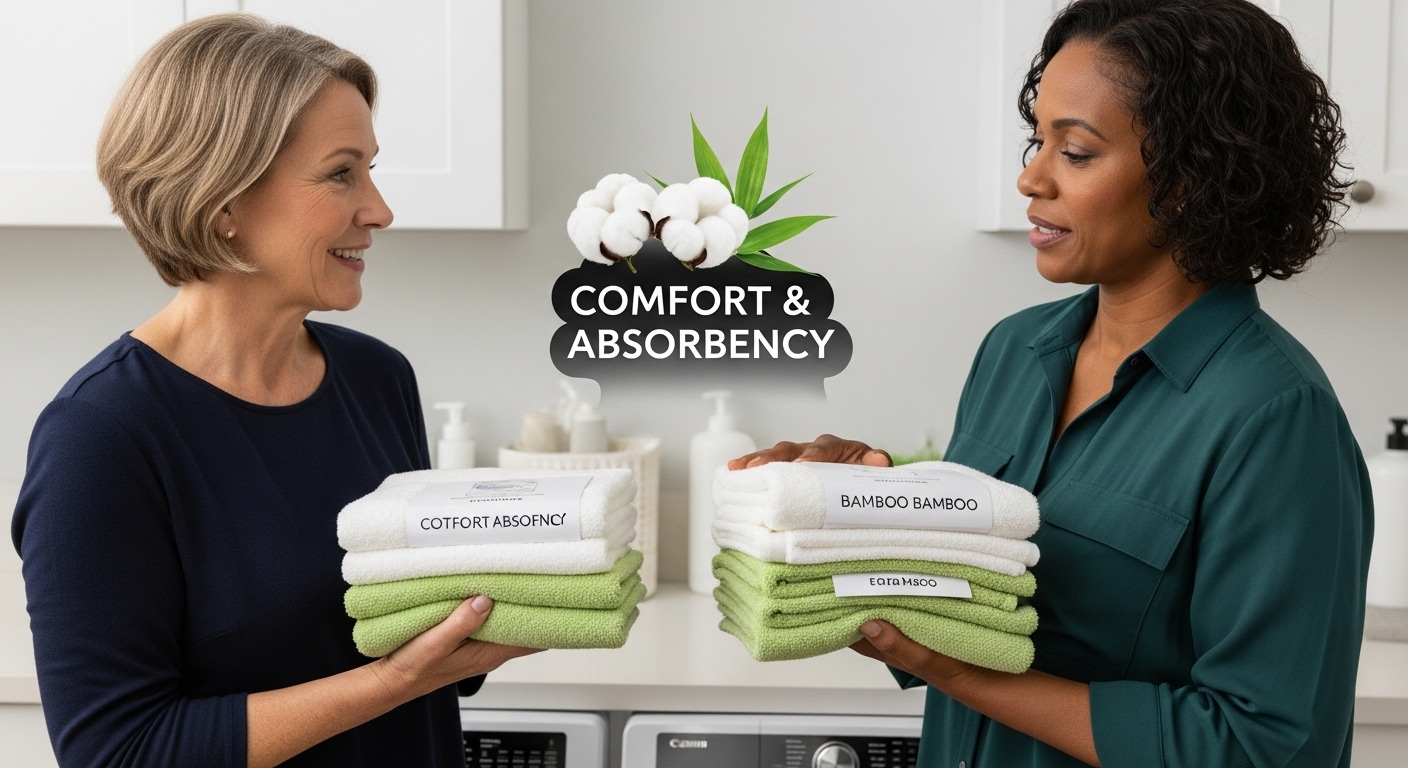
Care, Durability, and Trade-Offs
Longevity is where the two materials diverge most clearly. Cotton towels are forgiving: they stand up to regular machine washing, warmer water, and standard drying, and quality cotton often softens and performs better over time. That resilience is a big part of why cotton remains the default for bath towels at home and in hospitality.
Bamboo-viscose generally asks for gentler handling. Viscose fibers tend to be weaker when wet, so towels made from them usually do best with cooler, gentle washing and low-heat drying, and they can wear faster if laundered roughly or often. That is not a knock on the material it is simply a trade-off to plan for. A silky, lightweight towel that needs careful care suits some households; a plush, hard-wearing towel you can wash without much thought suits others.
On the environmental question, neither material is automatically "greener." Cotton farming uses water and agricultural inputs, while turning bamboo into viscose is a chemical-intensive process. The common shorthand that bamboo is inherently eco-friendly overlooks that most bamboo fabric is regenerated viscose, so it is more accurate to weigh the specific product and how long it lasts a durable towel you keep for years is often the more sensible choice regardless of fiber.
| Consideration | Cotton Towels | "Bamboo" (Viscose) Towels |
|---|---|---|
| Feel | Plush and lofty; softens with washing | Smooth, silky, lighter drape |
| Absorbency | High; holds water well | Varies; some blends trade absorbency for faster drying |
| Care | Tolerates regular washing and warmer drying | Prefers gentle washing and low-heat drying |
| Durability | Hard-wearing through frequent use | Good with careful handling; weaker when wet |
| Label clarity | Straightforward natural fiber | Often viscose or a blend; read the fiber content |
Which Towel Is Right for You
If you want a towel that is highly absorbent, plush underfoot and in hand, and able to survive frequent washing without fuss, cotton is the dependable choice and the reason it stays the standard for bath linens. If you specifically prefer a sleek, lightweight, silky feel and are happy to launder gently, a quality bamboo-viscose blend can be pleasant just read the fiber content so you know what you are actually buying, and set your expectations by the towel's weight and construction rather than the plant on the label.
At Lotus Linen we focus on what cotton does best. Our towels are woven from 100% zero-twist cotton at 620 GSM with a white body and our signature colored scallop piping, so they are absorbent, plush, and built to soften with every wash. You can also add in-house monogram embroidery name, initial, or monogram done in Orange County, California, typically within about 24 business hours.

Explore our scallop piping bath towels and coordinated towel sets at Lotus Linen, and choose a towel by how it is built, not just what it is called.
Frequently Asked Questions
What are the main differences between cotton and bamboo towels?
Cotton towels are made from a natural fiber that is spun and woven directly, giving a plush, highly absorbent, hard-wearing towel. Most "bamboo" towels are actually viscose or rayon regenerated from bamboo pulp, or a bamboo-cotton blend, which tends to feel smoother and lighter but needs gentler care.
Are bamboo towels really just viscose?
Usually, yes. The majority of towels sold as "bamboo" are rayon or viscose made by chemically processing bamboo cellulose. A smaller number use mechanically processed bamboo, and many are blends with cotton. Checking the fiber content on the label tells you what you are actually getting.
Which towel is more absorbent, cotton or bamboo?
Cotton is generally the more absorbent choice, holding more water in its fiber structure. Some bamboo-viscose blends dry faster, but faster drying often means the towel holds less water. For drying off after a bath or shower, cotton's absorbency is hard to beat.
Are bamboo towels automatically more eco-friendly than cotton?
Not automatically. Because most bamboo fabric is regenerated viscose made through a chemical-intensive process, the raw plant's fast growth does not make the finished towel inherently green. Both fibers have environmental trade-offs, so choosing a durable towel you will keep for years is often the more meaningful decision.
How should I care for cotton and bamboo towels?
Cotton towels handle regular machine washing and standard drying well. Bamboo-viscose towels generally last longer with cooler, gentle washing and low-heat drying, since viscose fibers are weaker when wet. Always follow the care label for the specific towel.

