
When people ask which towel material is "most absorbent," they're really asking which one will dry them off and feel good doing it. The material sets the starting point — a water-loving fiber behaves very differently from a water-shedding one — but the towel's actual performance also depends on the yarn, the pile construction, the weight, the finishing, and how much surface area touches your skin. This guide compares the main towel materials and explains why cotton remains the classic choice for a plush bath towel.
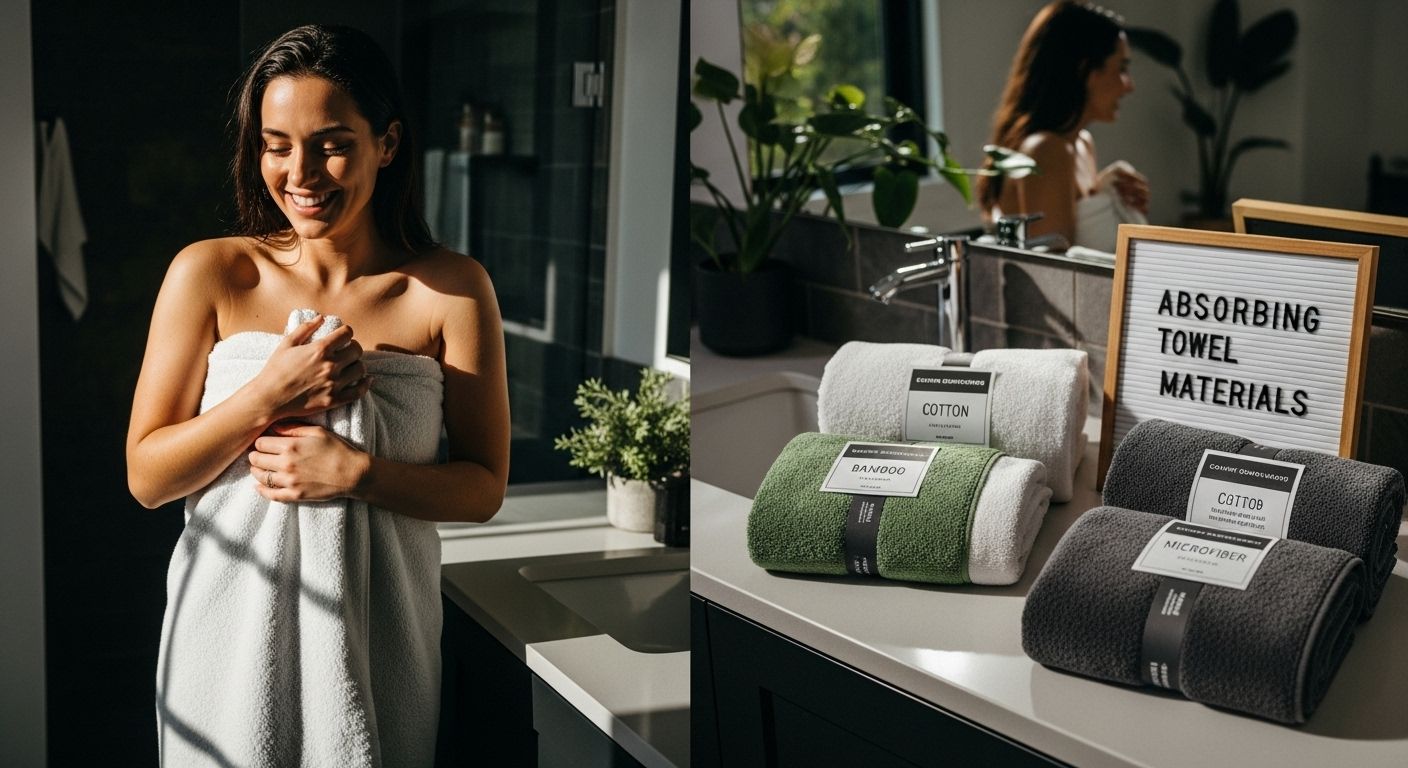
What actually affects a towel's absorbency
Absorbency isn't down to the fiber alone. It's a combination of things: a water-attracting fiber takes moisture in rather than repelling it; a looped terry surface multiplies the area touching your skin; and the yarn, weave, weight (GSM) and finishing decide how much of that potential you actually feel. Two towels made of the same material can perform very differently because of how they're built.
The main towel materials, compared
You'll mainly see three materials sold as bath and body towels. Rather than rank them, it helps to compare how each behaves:
| Material | Bath-towel feel | Moisture handling | Drying behavior | Main trade-off |
|---|---|---|---|---|
| Cotton (terry) | Soft, plush, the classic hand | Takes up and holds water well | Dries at a moderate pace | Heavier when wet than synthetics |
| Microfiber | Thin, synthetic, lightweight | Wicks and handles moisture | Dries quickly | Less plush; can feel "grabby" on skin |
| Bamboo-labeled | Silky, often a blend | Varies with the fiber and blend | Varies | "Bamboo" is usually a regenerated fiber or blend, so the label alone doesn't determine performance |
This is about fit for purpose, not a single winner — the right material depends on whether you want a plush bath towel, a fast-drying gym towel, or something in between.
Why cotton is the classic bath-towel material
For the towel you reach for after a shower, cotton has long been the default. It's a naturally water-attracting fiber, it tends to get softer with washing, and its terry loops hold water against the skin without feeling clammy. But "cotton" alone doesn't guarantee a great towel — how it performs still depends on construction:
- Zero-twist construction spins the yarn with little to no twist so each loop opens fully, contributing to a soft, open hand that readily takes up water.
- Loop density and pile — more and longer loops give more surface for moisture, which is closely tied to the towel's weight.
- Finishing — how a towel is washed and finished at the mill affects softness and how it behaves over its life.
Construction and weight matter as much as the material
Material sets the potential; construction and weight decide how much you feel. Weight (GSM) is the shorthand: denser, loopier towels hold more water, while lighter ones dry faster. If you want to match weight to how you'll use a towel, our towel GSM guide breaks down the ranges. The practical takeaway: a well-constructed mid-to-high-weight cotton towel usually out-performs a heavier, cheaply made one — material and construction work together.
Common questions, answered
What towel material is most absorbent?
There's no single universal winner — it depends on construction and what you need. Cotton is the established choice for a plush, absorbent bath towel because the fiber attracts water and its terry loops hold it well. Microfiber handles moisture and dries fast but feels thin; bamboo-labeled towels vary with their fiber and blend. For an after-shower towel, a well-made cotton terry is the dependable pick.
Are bamboo towels more absorbent than cotton?
Not reliably. Many "bamboo" towels are made from regenerated bamboo-derived fibers such as viscose or rayon, or are blended with cotton — so absorbency depends on how the fiber is processed and what it's blended with, not the bamboo label itself. A quality cotton terry towel is a more predictable everyday performer.
Is microfiber or cotton better for a bath towel?
For drying off after a shower, most people prefer cotton for its plush feel and gentle hand. Microfiber is at its best where fast drying and packability matter — the gym bag, travel, or a hair towel — rather than as your main bath towel.
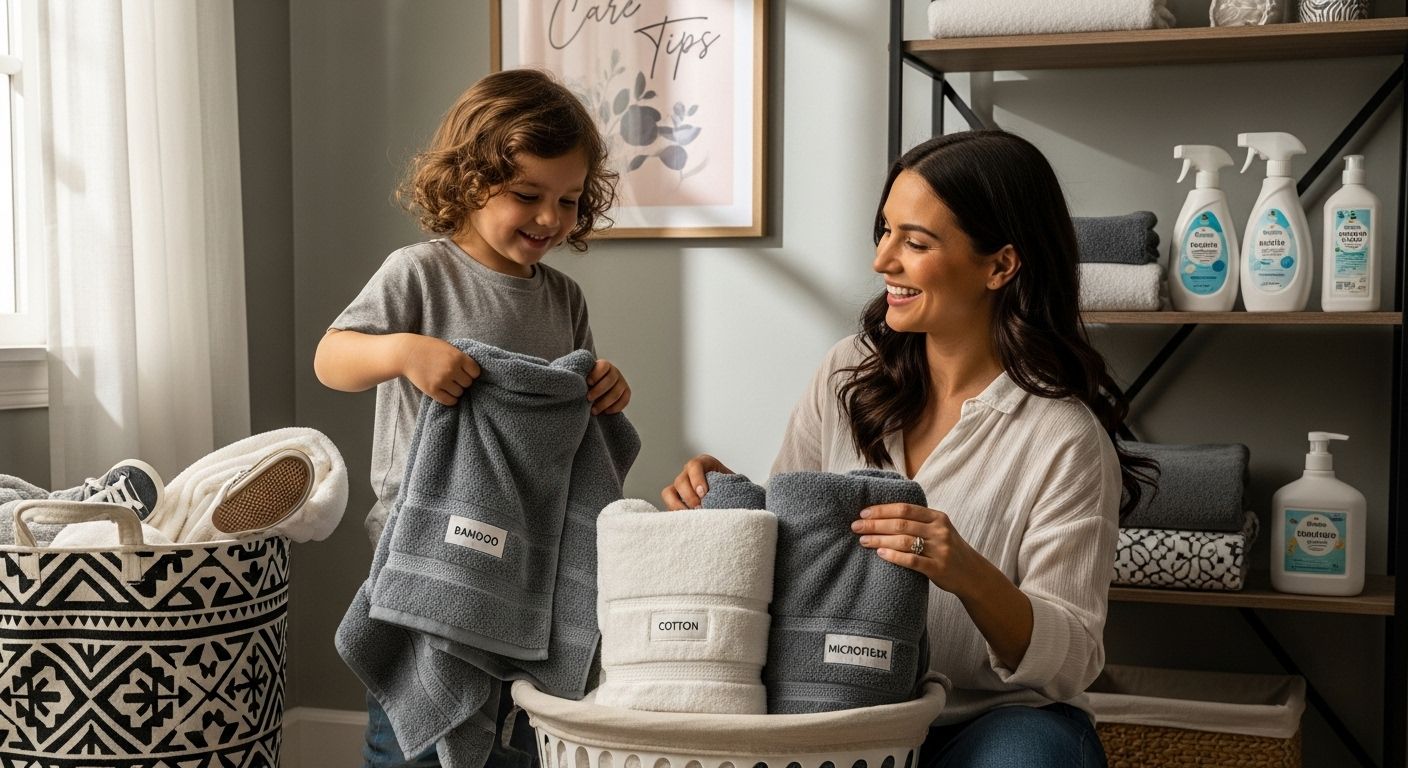
Why we use zero-twist cotton for Lotus Linen bath towels
We make our bath towels from 100% zero-twist cotton at 620 GSM. We chose that combination on purpose: the zero-twist yarn opens each loop for a soft, open hand that takes up water readily, and 620 GSM gives a substantial, plush feel without unnecessary heaviness. It's a balance of fiber and construction rather than a chase for the highest number — a choice we've made from working with these towels day to day. You can feel it across the scalloped towel collection, from bath towels and oversized bath sheets to matching hand towels.


