
The towel is one of the oldest everyday textiles, and its story runs from hand-woven bath cloths in ancient bathhouses to the looped terry towels in our bathrooms today. This is a short history of the towel: where the word comes from, the early cloths that came before modern towels, and how weaving turned a simple drying cloth into a household staple.
Table of Contents
- Origin of the word "towel"
- Early towels and bathhouse cloths
- Towels across cultures
- Terry toweling and the Industrial Revolution
- The modern towel
Origin of the Word "Towel"
The word towel comes from the Old French toaille, which traces back to a Frankish root meaning "to wash" or "to wipe." As Wikipedia's entry on the towel notes, that root ties the object to the simple act of drying from the very beginning. The etymology is a neat reminder that a towel has always been defined by what it does rather than how it looks: a cloth for wiping water away.
Early Towels and Bathhouse Cloths
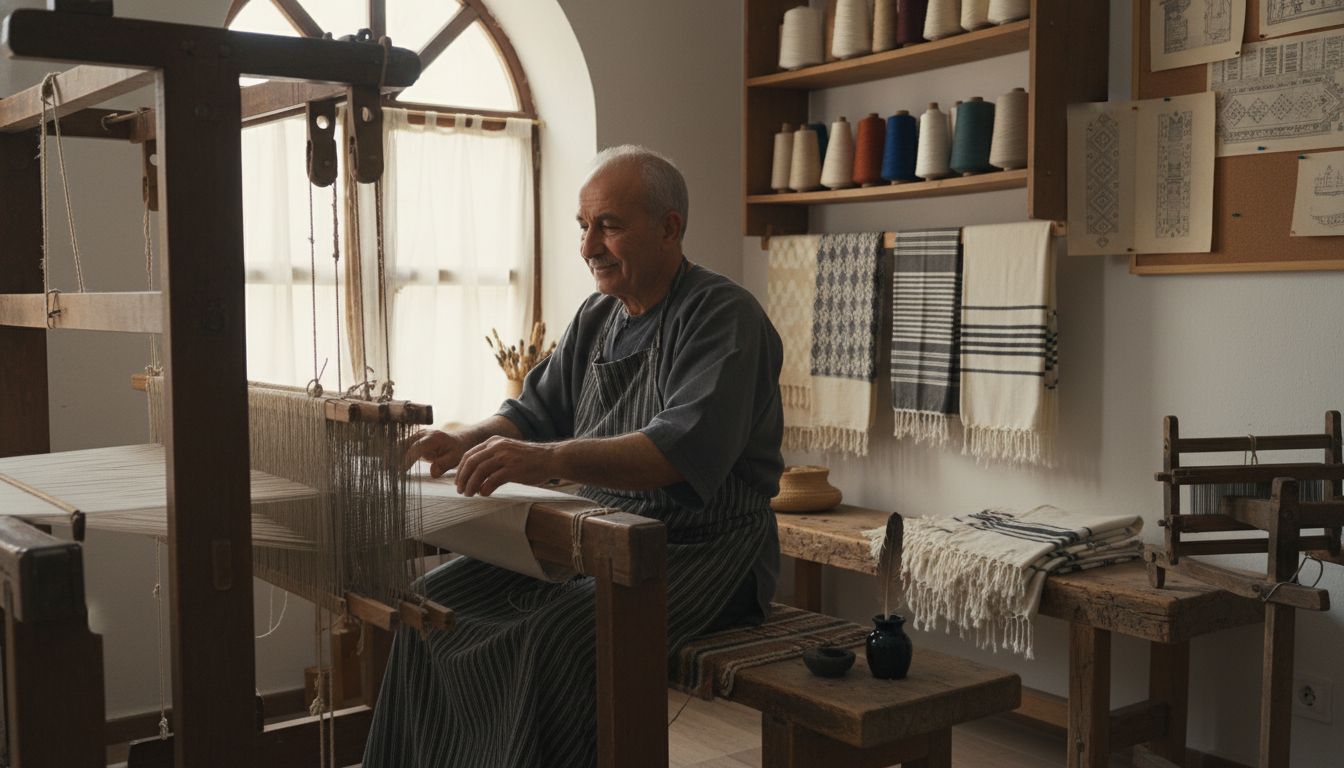
Long before terry loops, drying cloths were flat-woven from cotton or linen. In medieval Europe a personal towel was a valued possession, sometimes carried alongside other everyday belongings. In Anatolia, the flat-woven peshtemal grew out of communal bathing culture and became a fixture of the Ottoman hammam, used both to dry off and to wrap around the body.
These early cloths show that the towel began as a multipurpose textile tied to hygiene and ritual, not just a bathroom accessory. Craftsmanship mattered: many were woven by hand with patterns that signaled care and status.
Towels Across Cultures
Different regions developed their own drying cloths. In the Mediterranean and Yemen, the fouta — described in Wikipedia's entry on the fouta as a thin patterned cotton or linen cloth — served as both a wrap and a towel in public baths. In Japan, the tenugui, a light cotton cloth, was used for drying, wrapping, and decoration. Across these traditions the pattern is the same: a woven cloth adapted to local bathing habits and materials.
Terry Toweling and the Industrial Revolution
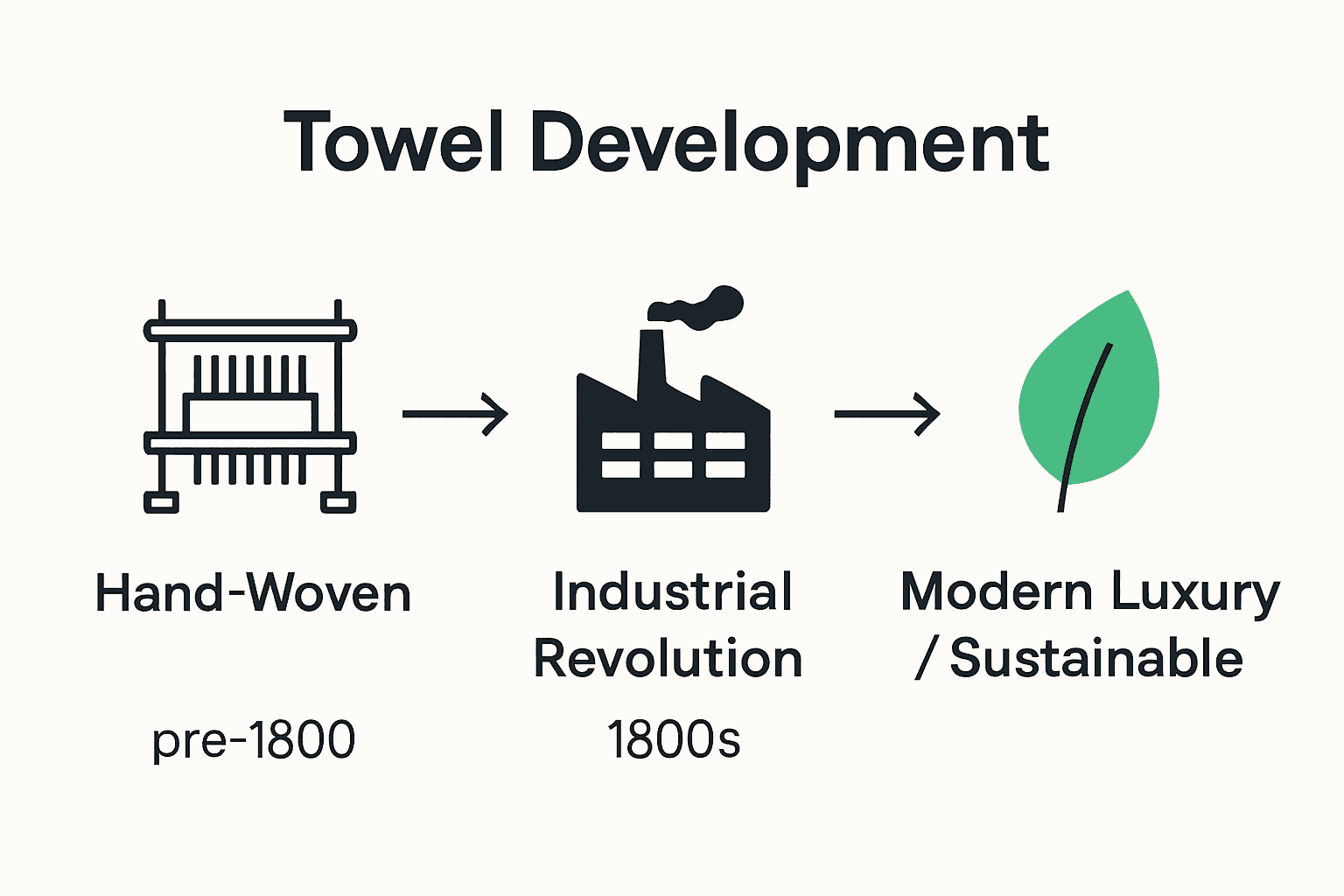
The towel we recognize today arrived with mechanized weaving. As cotton became cheaper and looms more capable, manufacturers could produce terry toweling — fabric with raised loops on both sides that dramatically increase surface area and absorbency. Towels went from a handmade luxury to an affordable household item made in many sizes and weights. The same era brought disposable paper towels: Bounty paper towels launched in 1965, a sign of how far the simple drying cloth had branched out.
The Modern Towel
Today's towels build on that terry foundation with refinements in cotton and construction. One example is zero-twist cotton, where the pile yarn is left largely untwisted so the loops stay open, absorb quickly, and feel especially soft — the construction we use for our own cotton towels. Personalization has also come full circle: just as early towels carried woven patterns, many households now add a monogram. We stitch names, initials, and monograms in-house from Orange County, California, finished with our signature scallop piping.
The through-line from a hand-woven peshtemal to a modern bath towel is consistency of purpose: a cloth made to dry you comfortably. If you want to bring a bit of that heritage home, explore the scallop-piping towel collection, or read our practical guide to choosing bath towels.
Frequently Asked Questions
Where does the word "towel" come from?
It comes from the Old French toaille, from a Frankish root meaning "to wash" or "to wipe" — so the name has always described a cloth used for drying.
What did people use before modern towels?
Flat-woven cotton and linen cloths. Examples include the Anatolian peshtemal used in Ottoman hammams, the Mediterranean fouta, and the Japanese tenugui.
When did looped terry towels become common?
During the Industrial Revolution, when mechanized weaving and cheaper cotton made terry toweling affordable and widely available in many sizes and weights.
Recommended
- How to Choose Bath Towels: A Simple Buyer's Guide
- What Makes Towels Absorbent: Fiber, Weave & Yarn Twist
- Bath Linen Buying Guide: What Counts as Bath Linen


