
TL;DR:
- Proper towel hygiene involves regular washing at high temperatures, thorough drying, and avoiding residue-producing products. Using the right materials, appropriate routines, and attention to drying conditions can prevent musty odors and bacterial growth. Implementing these practices ensures cleaner, fresher towels that protect skin health and extend their lifespan.
A plush, hotel-quality towel feels like a luxury upgrade until it starts smelling musty after just a few uses. Many people assume that premium materials automatically stay fresh, but even the finest cotton towel becomes a breeding ground for bacteria without the right care routine. Towel hygiene is one of the most overlooked aspects of home wellness, yet it directly affects your skin health, household cleanliness, and the longevity of your investment. This guide walks you through every essential step: what supplies you need, how often to wash, how to dry correctly, and how to troubleshoot when things go wrong.
Table of Contents
- What you need to maintain towel hygiene
- Washing frequency and methods: Home, spa, and family scenarios
- Drying towels: The crucial step
- Special circumstances: Disinfection, shared towels, and hospitality protocols
- Troubleshooting and keeping towels fresher longer
- What most people get wrong about towel hygiene
- Upgrade your towel hygiene experience with Lotus Linen
- Frequently asked questions
Key Takeaways
| Point | Details |
|---|---|
| Wash towels frequently | Clean bath towels every 2–3 days or after 3–5 uses for optimal hygiene. |
| Dry towels completely | Never leave towels damp or bunched; airflow and full drying prevent bacteria growth. |
| Boost hygiene for shared towels | Wash and dry more often when towels are shared or after any illness. |
| Avoid residue buildup | Skip fabric softeners and use hot water to keep towels absorbent and fresh. |
| Replace old or musty towels | Swap out towels that retain odor, lose softness, or don’t absorb well, for best results. |
What you need to maintain towel hygiene
With the problem established, let’s gather the right supplies and prep your towel hygiene toolkit. Getting organized before you build a routine makes every step easier and more consistent.
The foundation of good towel hygiene starts with the right materials and a little planning. Family towel hygiene basics begin with understanding what you already have and what you need to add. Not all detergents are created equal, and some common products actually work against hygiene rather than for it.
Here’s what you need in your toolkit:
- High-quality bath towels made from tightly woven cotton or quick-dry microfiber
- Enzyme-based or fragrance-free detergent that cleans without leaving residue
- White vinegar and baking soda for periodic deep cleaning
- A washing machine with hot water settings (or access to a commercial unit for spa use)
- Dedicated drying space with good airflow or direct sunlight
- Separate towels by use: face cloths, hand towels, body towels, and guest towels
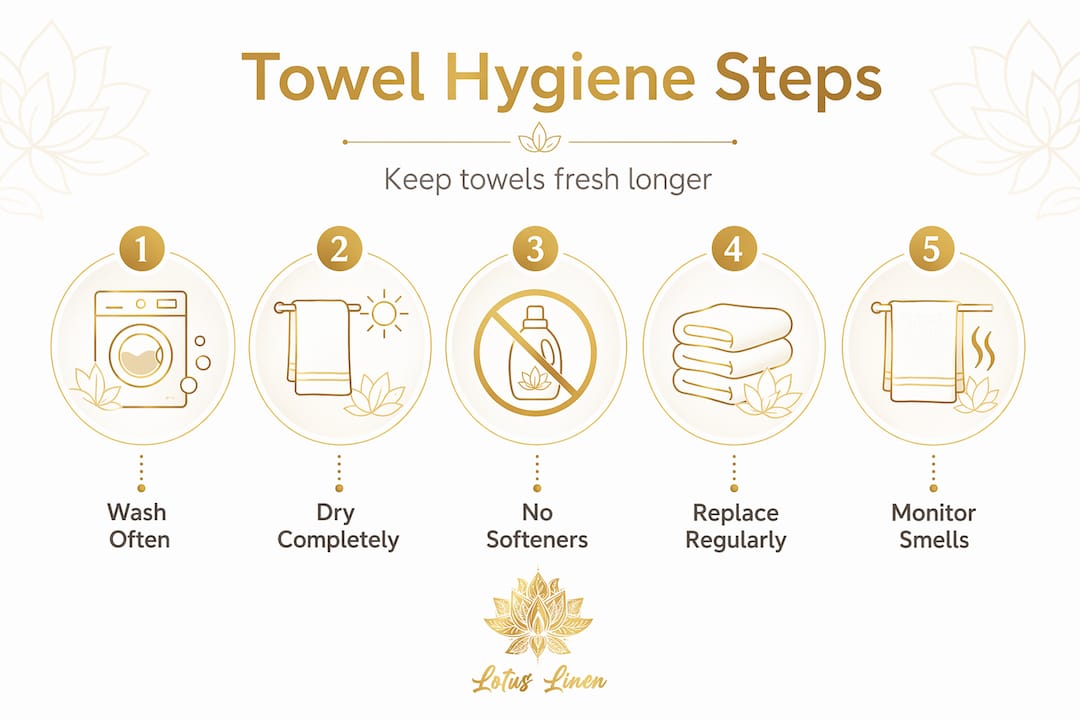
Fabric softeners deserve special attention here because they are one of the most counterproductive products people add to their laundry. They coat towel fibers with a waxy residue that reduces absorbency over time and traps moisture, which is exactly the opposite of what you want. Skip them entirely.
| Material/Tool | Purpose | Notes |
|---|---|---|
| Quality cotton towels | Core hygiene surface | Look for tight weave, 600+ GSM |
| Enzyme-based detergent | Breaks down organic residue | Avoid softeners and heavy perfume |
| White vinegar | Strips buildup, neutralizes odor | Use in rinse cycle occasionally |
| Baking soda | Deodorizes and brightens | Add to wash cycle as needed |
| Drying rack or towel bar | Promotes airflow between uses | Spread fully, never bunch |
| Washing machine (hot setting) | Sanitizes and deep cleans | 140°F optimal for bacteria kill |
Before starting any new hygiene routine, check your towels’ care labels. Some materials require cooler temperatures or specific wash cycles. Sort towels by their purpose, face versus body versus hands, and plan your drying space. Towel storage tips can help you organize your linen closet so that clean and dirty towels never mix.
Pro Tip: Investing in fast-drying towels, such as waffle-weave or microfiber options, makes your entire hygiene cycle more efficient. They dry between uses in a fraction of the time, reducing microbial growth risk significantly.
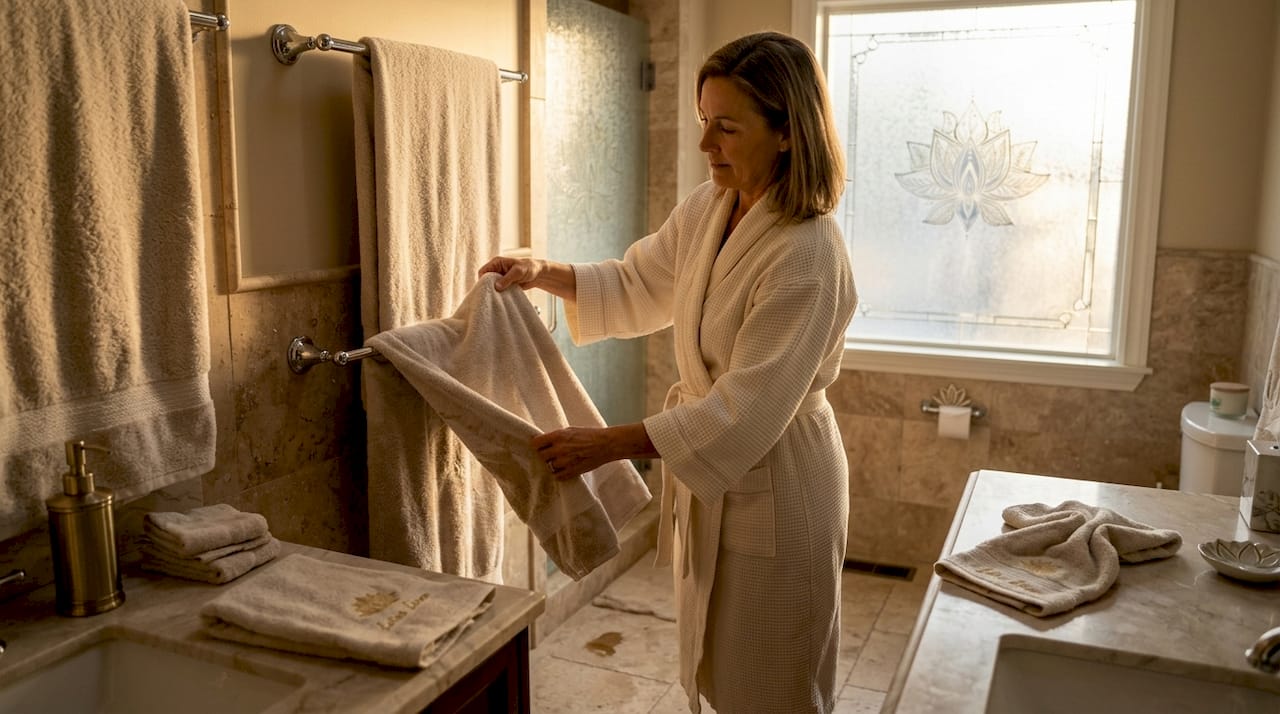
Proper drying between uses is a key hygiene mechanism: towels must be fully dried, not left damp or bunched up, because moisture supports microbial growth. This is true whether your towel cost $8 or $80.
Washing frequency and methods: Home, spa, and family scenarios
Armed with supplies, we move on to setting hygienic routines tailored to your space and risk level. The right washing frequency differs significantly depending on your household dynamics, health status, and environment.
Washing bath towels every 2 to 3 days or after 3 to 5 uses is the commonly recommended guideline for home settings, but that figure changes fast when you factor in kids, shared bathrooms, illness, or high-humidity climates. Families with young children, people with sensitive skin, or anyone recovering from illness should wash towels after every single use.
| Setting | Recommended Wash Frequency | Water Temp | Special Notes |
|---|---|---|---|
| Home (individual use) | Every 2 to 3 days | Hot (130 to 140°F) | No fabric softener |
| Family/shared bathroom | After every 1 to 2 uses | Hot | Separate by person |
| Children’s towels | After every use | Hot, check label | High contamination risk |
| Spa/hospitality (fresh) | After every guest use | Commercial hot wash | Regulatory compliance |
| Illness in household | After every single use | Hottest safe temp | Consider bleach if label allows |
Studies have found that 80% of towels contain harmful bacteria after just three or more days of use, a number that is unsettling but fixable with a consistent routine. The laundering frequency you choose has a bigger impact on your hygiene outcomes than the brand of detergent you buy.
Here is a step-by-step washing method that works across most settings:
- Pre-treat visibly soiled areas with a small amount of detergent or enzyme spray and let it sit for five minutes.
- Sort towels by color and weight before loading. Heavy bath towels should not be crammed in with delicate washcloths.
- Set the machine to hot water (at least 130°F for home use) and a full wash cycle, not a quick rinse.
- Add your detergent (measure correctly, do not overdose) and skip any fabric softener or dryer sheets.
- Run a second rinse cycle if your machine allows it, especially for thick towels where detergent can hide in the fibers.
- Transfer immediately to the dryer or drying rack once the cycle ends. Leaving wet towels in the drum creates the perfect environment for mold and mildew.
Important note: Cold washes may feel energy-efficient, but they are inadequate for sanitizing thick cotton towels. Bacteria can persist through cold-water laundering, surviving in the dense fibers where warmth and moisture are trapped. Always use the hottest water temperature the care label allows.
Drying towels: The crucial step
After a proper wash, drying techniques make or break towel hygiene. You can wash a towel perfectly and still end up with a musty mess if it does not dry completely and quickly.
Moist conditions actively promote bacterial regrowth, and thicker cotton fabrics are especially problematic if they are not fully dried after every use and every wash. Think of incomplete drying as resetting your hygiene progress back to zero.
Follow these steps every time for proper towel drying:
- Shake the towel out firmly before hanging or placing in the dryer to loosen fibers and improve airflow.
- Hang fully spread out on a towel bar or drying rack, never folded over a hook or bunched up.
- Ensure strong airflow in the drying area; open a window, turn on a fan, or use a bathroom exhaust fan.
- Use sunlight when possible because UV rays provide a natural antimicrobial boost and help eliminate lingering odors.
- Dry on medium-to-high heat if using a machine dryer; low heat is insufficient for thick towels.
- Check for dampness before storing: press the center of the towel firmly. If it feels even slightly cool or damp, give it more time.
Indoor drying guidance matters especially during winter months or in humid climates where air drying takes significantly longer. In spa or hospitality environments, commercial tumble dryers with high-heat settings are the standard, and for good reason. They reach temperatures that residential dryers rarely achieve.
Understanding how to dry towels properly is also about preserving fabric quality. Overdrying breaks down fibers, but underdrying causes hygiene issues. Finding the balance matters for both performance and longevity. And if odors keep creeping back, targeted strategies for preventing towel odor can address the root cause rather than just masking it.
Pro Tip: Never use a single towel bar for two or more towels stacked on top of each other. Each towel needs its own space to air out. A small investment in extra towel hooks or a freestanding rack pays off in fresher towels every time.
Special circumstances: Disinfection, shared towels, and hospitality protocols
Beyond daily routines, special cases call for next-level hygiene consideration. Some situations require going further than a standard hot wash.
Higher-risk scenarios where you need to upgrade your approach include:
- Illness in the household: A family member with a cold, flu, stomach virus, or skin infection means their towels must be washed immediately after every single use and kept completely separate from others.
- Children sharing towels: Kids spread germs quickly and touch their faces constantly. Shared children’s towels should be washed daily during illness and every one to two days otherwise.
- Spa and salon reuse programs: Towel reuse programs in hospitality settings require explicit guest communication and defined mandatory-change triggers to maintain safety and trust.
- Post-surgery or immunocompromised individuals: Every item that touches skin must be laundered after a single use with the hottest water the fabric allows.
- Gyms and shared fitness spaces: Towels used in high-moisture, high-traffic environments should be treated as single-use until washed.
For disinfection after illness exposure, CDC guidelines recommend laundering with detergent at the recommended water temperature, fully drying, and using sanitization methods such as bleach solutions where appropriate, always following manufacturer guidance. Steam cleaning is another effective option for materials that cannot handle bleach.
Always check your care label before using bleach or high-heat disinfection. High temperatures and bleach can degrade certain fibers, void warranties, and cause premature wear on specialty fabrics. When in doubt, opt for a hot wash with an enzyme detergent rather than harsh chemicals.
Healthcare and hospitality linen standards generally require higher thermal disinfection conditions than standard residential laundering. Professional settings use water temperatures and processing times that far exceed what most home machines deliver. If you are running a small spa or bed-and-breakfast, investing in a commercial-grade washer is not optional; it is a liability and safety issue.
Knowing when to retire a towel matters just as much as knowing how to wash one. Check out guidance on advanced bath linen hygiene for a complete picture of lifecycle management.
Troubleshooting and keeping towels fresher longer
Finally, let’s address what to do when towels are not up to par and how to keep them fresher for longer.
The most common signs that your towel hygiene has broken down include:
- A sour or musty smell that lingers even after washing
- A slimy or stiff texture instead of soft and fluffy
- Reduced absorbency where water beads off instead of being absorbed
- Visible discoloration, pilling, or thinning patches
- Persistent skin irritation after drying off
These are all signals worth acting on immediately. The good news is that most towels can be recovered with the right treatment before they need to be replaced.
Steps to restore freshness to tired towels:
- Run a hot wash with one cup of white vinegar and no detergent to strip buildup and neutralize odor.
- Follow with a second wash using half a cup of baking soda and no detergent to brighten fibers and remove remaining residue.
- Dry completely on high heat and air out before putting back into rotation.
- Stop using fabric softener immediately and switch to a residue-free detergent going forward.
Good Housekeeping notes that towel hygiene is fundamentally about performance loops: fast drying, correct laundering frequency, and avoiding products that reduce absorbency and trap odors. Premium materials perform beautifully when you follow the right maintenance cycle, and they fail quickly when you do not. Explore fresh towel solutions for targeted fixes, or learn more about when to replace towels and the signs towels need replacing to know when recovery is no longer worth the effort.
Pro Tip: Set a simple replacement schedule rather than waiting for towels to fail. In high-traffic bathrooms or spa settings, plan to rotate in fresh towels every 12 to 18 months. Mark the purchase date on a tag inside the linen closet to keep track without guesswork.
What most people get wrong about towel hygiene
With the how-to process covered, let’s challenge some of the most common myths and mistakes around towel hygiene that even hygiene-conscious people fall into.
The biggest mistake we see is treating towel hygiene as a numbers game. People ask “how many days can I use this?” and chase a single universal answer. The honest answer is: it depends on your drying conditions, your bathroom humidity, your skin, and what you use the towel for. A towel hung in a well-ventilated bathroom after a light rinse-off shower lasts longer between washes than one used after an intense workout in a steamy, windowless bathroom. Context always wins over calendar.
The second mistake is assuming that expensive towels take care of themselves. Luxury materials are more forgiving and more durable, but they are not self-cleaning. A thick, plush towel actually takes longer to dry than a lightweight one, which means it carries a higher microbial risk in suboptimal drying conditions, not a lower one. If you invest in premium towels, you owe it to yourself to give them the drying space and airflow they need to perform.
The third and most overlooked mistake is underestimating residue buildup. Fabric softeners, overdosed detergent, and hard water minerals all accumulate in towel fibers over time. This buildup reduces absorbency, traps moisture, and creates a stubborn odor that no amount of washing seems to fix. The pros running spa and hotel laundry operations avoid softeners entirely, strip their linens periodically, and monitor water hardness to prevent this cycle before it starts.
The smartest towel hygiene routine is one that you actually observe and adjust based on real conditions. Notice how your towels smell and feel after two days versus four. Check whether your bathroom dries out quickly after a shower or stays damp for hours. These observations give you better data than any generalized schedule. Real-life towel routines show how families with very different bathroom setups adapt the same core principles differently, and all of them succeed because they pay attention.
Upgrade your towel hygiene experience with Lotus Linen
To reinforce these habits, consider upgrading your towel collection for an effortless fresh start. The right materials make every step of this routine easier, faster, and more effective.
At Lotus Linen, we design premium quick-dry towels with hygiene performance built into every detail, from fiber density to weave structure, so that they dry faster between uses and hold up beautifully through high-frequency washing. Pair them with our luxury waffle robes, which offer the same fast-drying advantages in a spa-quality loungewear format. For a truly personalized self-care experience, explore our personalized spa robes to bring hotel-level elegance home. Whether you are building a hygiene-forward family bathroom routine or outfitting a boutique spa, Lotus Linen gives you materials that work as hard as your habits do.
Frequently asked questions
How often should towels be washed in a typical home?
Wash bath towels every 2 to 3 days or after 3 to 5 uses for best hygiene, and increase that frequency for shared towels or anyone with sensitive skin.
What’s the best way to sanitize towels after illness?
Launder with detergent at the recommended water temperature, dry completely, and add bleach only if the care label permits it for maximum disinfection.
Why do towels smell bad even after washing?
Fabric softener residue and incomplete drying are the two primary culprits; strip buildup with a vinegar wash and ensure towels dry fully every time.
Are there special towel hygiene rules for spas or hospitality?
Yes; healthcare and hospitality linen standards) require higher thermal disinfection temperatures and stricter laundering protocols than typical home washing can achieve.
Should towels be shared among family members?
It is safest to avoid sharing, but when necessary, wash shared towels more frequently and always ensure they are completely dry before the next use to reduce germ transfer.

