
TL;DR:
- Eco-friendly bathrobes are made from certified organic fibers using chemical-free processes and sustainable practices.
- Organic cotton and bamboo each offer unique benefits, with cotton being more plush and bamboo more breathable.
- Verifiable certifications like GOTS and OEKO-TEX ensure genuine sustainability and high-quality, long-lasting robes.
Most people assume they have to choose between an eco-friendly bathrobe and a genuinely luxurious one. That assumption is outdated. Today’s sustainable bathrobes are made from organic, renewable fibers using chemical-free processing, low-water manufacturing, and certifications like GOTS and OEKO-TEX that verify every claim on the label. The result is a robe that feels incredible, lasts for years, and doesn’t leave a trail of pesticides or synthetic chemicals behind it. In this guide, we’ll walk you through what actually makes a bathrobe eco-friendly, which materials perform best, how comfort connects to sustainability, and how to shop without getting misled.
Table of Contents
- What makes a bathrobe eco-friendly?
- Material deep dive: Organic cotton vs. bamboo robes
- How eco-friendly bathrobes impact comfort, wellness, and planet
- Shopping smart: Certifications, pitfalls, and choosing the right robe
- Our take: Why mindful material choices matter in everyday comfort
- Explore sustainable comfort with Lotus Linen
- Frequently asked questions
Key Takeaways
| Point | Details |
|---|---|
| Certified materials matter | Always choose bathrobes with GOTS or OEKO-TEX certifications for verified sustainability and skin safety. |
| Material processing impacts eco-friendliness | Organic cotton and bamboo each offer benefits, but how they’re processed determines their true environmental impact. |
| Comfort and sustainability can coexist | Modern eco-friendly bathrobes deliver both luxury comfort and planet-friendly benefits for self-care lovers. |
| Check beyond buzzwords | Read labels and certifications closely to avoid greenwashed marketing claims. |
What makes a bathrobe eco-friendly?
Not every robe sold as “natural” earns that label honestly. A truly eco-friendly bathrobe goes beyond the fiber itself and considers how that fiber was grown, processed, dyed, and finished. The eco-friendly bathrobe benefits you hear about only materialize when the entire supply chain holds up to scrutiny.
Here’s what to look for when evaluating a robe’s sustainability credentials:
- Organic or renewable fibers: Organic cotton, bamboo, and hemp are grown without synthetic pesticides or fertilizers.
- Chemical-free processing: Dyes and finishing treatments should be free from harmful substances like formaldehyde or azo dyes.
- Water conservation: Responsible manufacturers use low-water or closed-loop dyeing systems that recycle water instead of dumping it.
- Recycled materials: Some brands incorporate recycled polyester or post-consumer cotton into their blends.
- Ethical labor standards: Eco-friendly production also means fair wages and safe working conditions.
Certifications are the fastest way to verify these claims. GOTS certification ensures at least 70% organic fibers and rigorous environmental and social criteria throughout the supply chain. OEKO-TEX Standard 100 tests finished products for over 100 harmful substances. These aren’t marketing badges. They’re third-party audits with real consequences for brands that fall short.
“Natural” and “eco-friendly” are not the same thing. A robe made from conventionally grown cotton can still involve heavy pesticide use, synthetic dyes, and chemical softeners. The label on the tag tells you the fiber. The certification tells you the story behind it.
You’ll also find sustainable bath linen options that combine certifications with thoughtful design, proving that responsible production and beautiful aesthetics aren’t mutually exclusive.
Pro Tip: When shopping, search for the certification number on the brand’s website. Legitimate GOTS and OEKO-TEX certificates are publicly verifiable. If a brand can’t provide one, treat their eco claims with skepticism.
Material deep dive: Organic cotton vs. bamboo robes
With the core features understood, let’s compare the two leading eco-friendly materials and reveal which is best under different priorities.
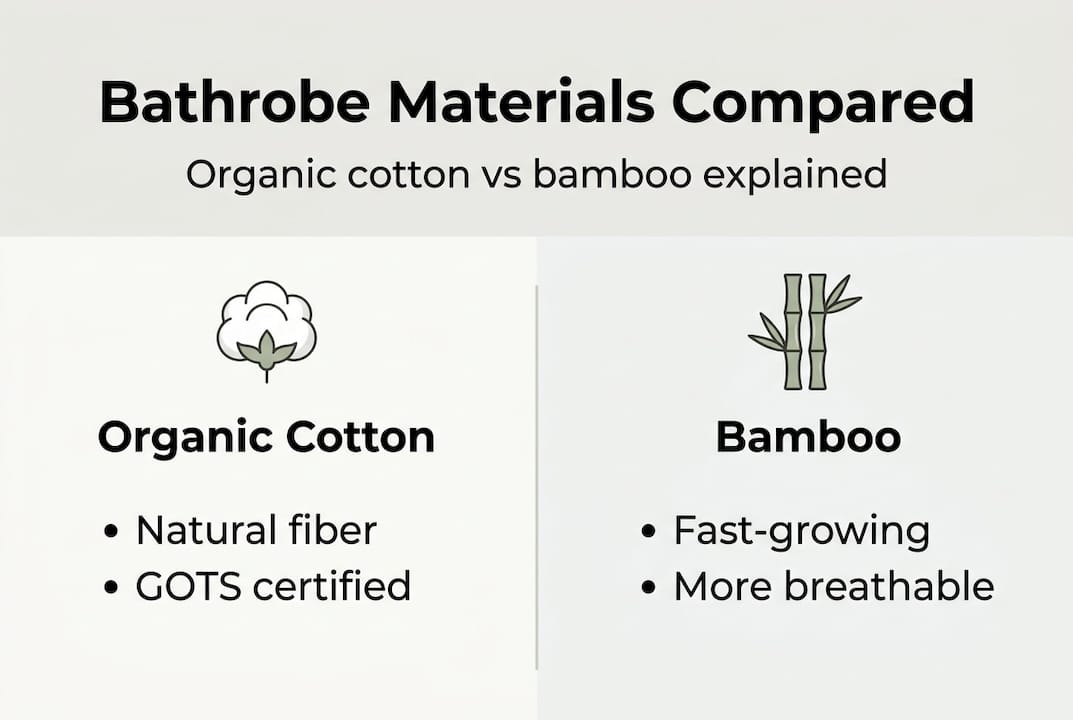
Organic cotton and bamboo are the two most popular sustainable bathrobe fibers, and they each have a distinct personality. Organic cotton robes use pesticide-free farming that reduces chemical use and supports soil health, using up to 91% less water than conventional cotton farming. That’s a meaningful environmental win, though it’s worth noting that cotton still requires more water than bamboo overall.
Bamboo grows fast, requires no pesticides, and regenerates from its own roots. Bamboo bathrobes are 3.5x more breathable than cotton and carry natural antibacterial properties, but the viscose processing method used to turn bamboo pulp into fabric can involve harsh chemicals unless a closed-loop lyocell process is used instead.

Here’s a side-by-side look at how they compare:
| Feature | Organic cotton | Bamboo (lyocell) |
|---|---|---|
| Softness | High | Very high |
| Breathability | Good | Excellent |
| Absorbency | Excellent | Good |
| Water use | Moderate | Low |
| Chemical risk | Low (if GOTS) | Low (if lyocell) |
| Durability | Very high | High |
| Best for | Plush, spa-style robes | Lightweight, warm-climate use |
When reading product labels, follow these steps to cut through the noise:
- Check whether the robe specifies “organic cotton” or just “cotton.” The word organic matters.
- For bamboo, look for “bamboo lyocell” rather than “bamboo viscose” to confirm cleaner processing.
- Search for a GOTS or OEKO-TEX certification number, not just a logo.
- Look at the GSM (grams per square meter). Higher GSM means a heavier, more absorbent robe.
- Check the benefits of cotton bathrobes for your specific skin type before committing to a material.
For a bamboo vs organic cotton comparison that goes deeper into sleepwear performance, independent reviews offer useful real-world data. Neither material wins outright. Your climate, skin sensitivity, and how you use your robe should drive the decision.
How eco-friendly bathrobes impact comfort, wellness, and planet
Understanding materials is only part of the story. Let’s connect it to how your robe actually feels and supports your values at home.
Natural fibers interact with your skin differently than synthetics. Organic cotton and bamboo are both hypoallergenic, free from residual chemicals, and breathable in ways that polyester simply can’t match. For anyone with sensitive skin, eczema, or chemical sensitivities, this isn’t a minor detail. It’s the difference between a robe you reach for every morning and one that sits on a hook.
Here’s what eco-friendly bathrobes consistently deliver:
- Skin comfort: No synthetic dyes or chemical finishes means less irritation and a softer feel straight from the wash.
- Temperature regulation: Natural fibers wick moisture and allow airflow, keeping you comfortable after a shower or during a long morning routine.
- Longevity: High-quality organic weaves hold their shape and softness through hundreds of washes.
- Lower environmental footprint: Less pesticide runoff, reduced carbon emissions from shorter supply chains, and biodegradable end-of-life disposal.
Brands like Coyuchi, Public Goods, and Cozy Earth use organic and bamboo fabrics with GOTS certification and premium weaves that deliver superior comfort alongside verified sustainability. Public Goods bathrobes are GOTS-certified Turkish cotton and rated 4.8 out of 5, while Parachute’s 400 GSM Turkish cotton ranks among the best overall for plush comfort.
Using your robe as part of a bathrobes for at-home spa ritual adds another layer of value. The sensory experience of wrapping yourself in a clean, chemical-free fabric after a bath is genuinely different. It’s calmer. Softer. More intentional.
Pro Tip: Prioritize a GSM between 400 and 600 for the best balance of plush comfort and drying speed. Below 400 feels thin; above 700 takes too long to dry and can feel heavy. Check bathrobe comfort tips for more guidance on finding your ideal weight.
Shopping smart: Certifications, pitfalls, and choosing the right robe
With the benefits clear, here’s how to cut through marketing buzz and buy a robe that truly aligns with your values.
Greenwashing is real and it’s common in the textile industry. A robe labeled “eco” or “natural” can still involve bamboo viscose chemical processing that pollutes waterways if it’s not a closed-loop system. Organic cotton, while far better than conventional, is still water-intensive. The only way to verify claims is through recognized certifications.
Here’s a step-by-step checklist for evaluating any eco-friendly bathrobe before you buy:
- Confirm the certification. GOTS and OEKO-TEX are the gold standards. Look for the certificate number, not just the logo.
- Read the fiber content label. “Organic cotton” and “cotton” are not interchangeable. Neither are “bamboo lyocell” and “bamboo viscose.”
- Research the brand’s supply chain. Transparent brands publish their factory locations and environmental audit results.
- Check the GSM and weave. Terry weave is more absorbent; waffle weave is lighter and dries faster. Match to your lifestyle.
- Consider your washing habits. Eco-friendly robes last longer when washed in cold water with gentle detergent. Factor this into your care routine.
Not all eco claims are created equal. “Made with organic cotton” can legally mean as little as 5% organic fiber in some markets. Only GOTS certification guarantees a meaningful threshold.
For a full breakdown of important bathrobe features to prioritize, from pocket placement to belt loops and collar style, it helps to know exactly what you need before you shop. Sustainability and functionality should work together, not compete.
Our take: Why mindful material choices matter in everyday comfort
We’ve spent years thinking about what makes a bathrobe genuinely good. And we’ve come to believe that material transparency is the most underrated factor in the entire purchase decision. Most buyers focus on price and appearance. But the fabric touching your skin every morning, the dyes sitting against your body, the chemicals used to make that robe feel “soft” out of the box — those details accumulate.
Eco-conscious living isn’t about grand gestures. It’s about the small, repeated choices that add up over time. Choosing a why eco-friendly matters robe made from verified organic fibers is one of those choices. It supports healthier farming, cleaner waterways, and your own skin health simultaneously. That’s not a compromise. That’s an upgrade. The brands doing this well aren’t cutting corners on comfort to hit a sustainability checkbox. They’re proving that the two reinforce each other when the intention behind the product is genuine.
Explore sustainable comfort with Lotus Linen
Ready to upgrade your loungewear and make a difference with each purchase?

At Lotus Linen, we believe your robe should feel as good as the values behind it. Our collection of plush eco-friendly bathrobes brings together premium organic and natural fibers, thoughtful construction, and the kind of softness you’ll notice from the very first wear. Whether you’re looking for a relaxed weekend layer or a spa-quality wrap, our waffle robes for men and women offer a lighter, breathable alternative that doesn’t sacrifice comfort. Browse the full Lotus Linen collection and find the robe that fits your lifestyle, your values, and your mornings.
Frequently asked questions
What is the most sustainable material for a bathrobe?
GOTS-certified organic cotton is generally the most sustainable choice because it meets strict standards for both farming and processing. GOTS certification ensures at least 70% organic fibers alongside rigorous environmental and social criteria.
Are bamboo bathrobes eco-friendly?
Bamboo is an eco-friendly crop, but the robe is only truly sustainable if it uses closed-loop or lyocell processing. Bamboo viscose processing can involve harsh chemicals that offset the environmental benefits of the plant itself.
How can I tell if a bathrobe is really eco-friendly?
Check for a verifiable GOTS or OEKO-TEX certification number and look for specific details about material sourcing and processing methods. GOTS and OEKO-TEX are third-party verified, making them far more reliable than general marketing claims.
Do eco-friendly bathrobes last as long as conventional ones?
Yes, when properly cared for, eco-friendly bathrobes made from organic cotton or bamboo lyocell are just as durable as conventional options. Established brands use 400 to 700 GSM weaves specifically designed for long-term absorbency and durability.

