
Choosing chemical-free towels means making wellness an everyday priority. Over 60% of American families now seek products free from harsh additives to protect skin and reduce household toxins. For urban women dedicated to safe, eco-friendly self-care, finding bath linens that blend purity with luxury is more than a trend—it is a way to nurture loved ones and the planet. Discover what sets truly chemical-free towels apart and how they elevate your routine.
Table of Contents
- What Makes A Towel Chemical Free
- Types Of Chemical Free Towels Available
- Benefits For Sensitive Skin And Health
- Environmental Impacts Of Chemical Free Towels
- How To Choose Quality Chemical Free Towels
Key Takeaways
| Point | Details |
|---|---|
| Chemical-free towels promote health and sustainability | They are made from natural fibers without harmful synthetic treatments, making them safer for sensitive skin and better for the environment. |
| Look for certifications when purchasing | Certifications like GOTS and Oeko-Tex ensure the towels meet organic standards and contain minimal chemicals. |
| Variety of options available | Consumers can choose from organic cotton, bamboo, hemp, and flax towels, each with unique benefits tailored to different needs. |
| Mindful disposal practices | Chemical-free towels are often biodegradable and compostable, reducing landfill waste and supporting eco-friendly practices. |
What Makes a Towel Chemical Free
Chemical-free towels represent a revolutionary approach to textile manufacturing that prioritizes human health and environmental sustainability. These specialized textiles are crafted through meticulous production processes that eliminate harmful synthetic treatments, focusing instead on natural fiber processing techniques.
The core characteristics of chemical-free towels involve several critical components. Natural fibers like unbleached cotton form the foundation, sourced from environments that minimize pesticide and synthetic fertilizer usage. Manufacturers avoid harsh chemical treatments during production, which means no chlorine bleaching, no synthetic dyes, and no formaldehyde-based finishing processes. Instead, they employ mechanical finishing techniques that maintain the textile’s inherent properties while ensuring softness, absorbency, and durability.
From a health perspective, chemical-free towels provide significant advantages for individuals with sensitive skin, allergies, or environmental sensitivities. By removing synthetic chemical treatments, these towels reduce potential skin irritation and minimize exposure to potentially toxic substances. The hydrophilic cotton fibers naturally absorb moisture efficiently, creating a safer and more comfortable drying experience without compromising performance.
Pro tip: When shopping for chemical-free towels, look for certifications like GOTS (Global Organic Textile Standard) or Oeko-Tex, which verify minimal chemical processing and ensure textile safety.
Types of Chemical Free Towels Available
Chemical-free towels offer a diverse range of options for health-conscious consumers seeking safe and sustainable textile solutions. Organic fiber towels come in multiple varieties, each providing unique benefits and characteristics tailored to different preferences and needs.
The primary types of chemical-free towels include 100% organic cotton, bamboo, hemp, and flax-based textiles. Organic cotton towels remain the most popular, characterized by their soft texture and rigorous manufacturing standards that eliminate synthetic chemicals. These towels typically carry important certifications like GOTS (Global Organic Textile Standard) and MADE SAFE, which guarantee minimal environmental impact and absence of toxic substances. Bamboo towels represent another exceptional category, offering naturally antimicrobial properties and exceptional moisture-wicking capabilities.

Beyond fabric composition, chemical-free towels are distinguished by their processing methods. Some variations include unbleached kraft towels, semi-bleached options, and completely untreated textiles. Manufacturers focus on mechanical finishing techniques that preserve the natural integrity of fibers while ensuring optimal performance. This approach means avoiding chlorine bleaching, synthetic dyes, and formaldehyde-based treatments that can potentially harm skin or the environment.
Pro tip: Always check for third-party certifications when purchasing chemical-free towels to ensure genuine organic standards and minimal chemical processing.
Here’s a summary of chemical-free towel fiber options and their standout qualities:
| Towel Type | Main Benefit | Typical Certification | Distinct Attribute |
|---|---|---|---|
| Organic Cotton | Softness, durability | GOTS, MADE SAFE | Gentle on sensitive skin |
| Bamboo | Antimicrobial action | Oeko-Tex | Superior moisture wicking |
| Hemp | Eco-friendly growth | GOTS | Highly biodegradable |
| Flax (Linen) | Fast drying | Oeko-Tex | Naturally textured feel |
Benefits for Sensitive Skin and Health
Chemical-free towels offer remarkable advantages for individuals struggling with sensitive skin conditions, providing a gentle and protective solution to common textile-related health challenges. Hypoallergenic towel materials reduce skin irritation risks by eliminating harsh chemical treatments that can trigger allergic reactions and dermatological complications.
For people with conditions like eczema, psoriasis, or chronic skin sensitivity, organic cotton towels represent a transformative textile option. These towels are meticulously crafted to avoid synthetic dyes, formaldehyde, and chemical residues that typically cause contact dermatitis. Certified by programs like MADE SAFE, these textiles maintain the skin’s natural protective barrier, preventing potential inflammatory responses and minimizing the likelihood of unexpected allergic reactions.
Beyond immediate skin protection, chemical-free towels contribute to long-term health by reducing exposure to potentially harmful substances. The natural fibers used in these towels—such as organic cotton, bamboo, and hemp—possess inherent antimicrobial properties that help maintain skin hygiene without relying on artificial chemical treatments. This approach not only protects individuals with sensitive skin but also provides a proactive strategy for maintaining overall dermatological wellness.
Pro tip: Perform a patch test with new chemical-free towels by touching a small section to your skin and monitoring for any potential reactions before full use.
Environmental Impacts of Chemical Free Towels
Chemical-free towels represent a significant advancement in sustainable textile production, offering substantial environmental benefits that extend far beyond traditional manufacturing practices. Sustainable towel production minimizes ecological footprints by dramatically reducing chemical pollution and conserving natural resources through innovative manufacturing techniques.
The environmental advantages of chemical-free towels are multifaceted and profound. Organic cotton production dramatically reduces pesticide usage, preventing soil degradation and protecting local ecosystems. Manufacturers employing these sustainable practices typically invest in renewable energy sources, implement water conservation strategies, and minimize chemical inputs. This holistic approach significantly reduces the carbon footprint associated with textile manufacturing, creating a more environmentally responsible product lifecycle.
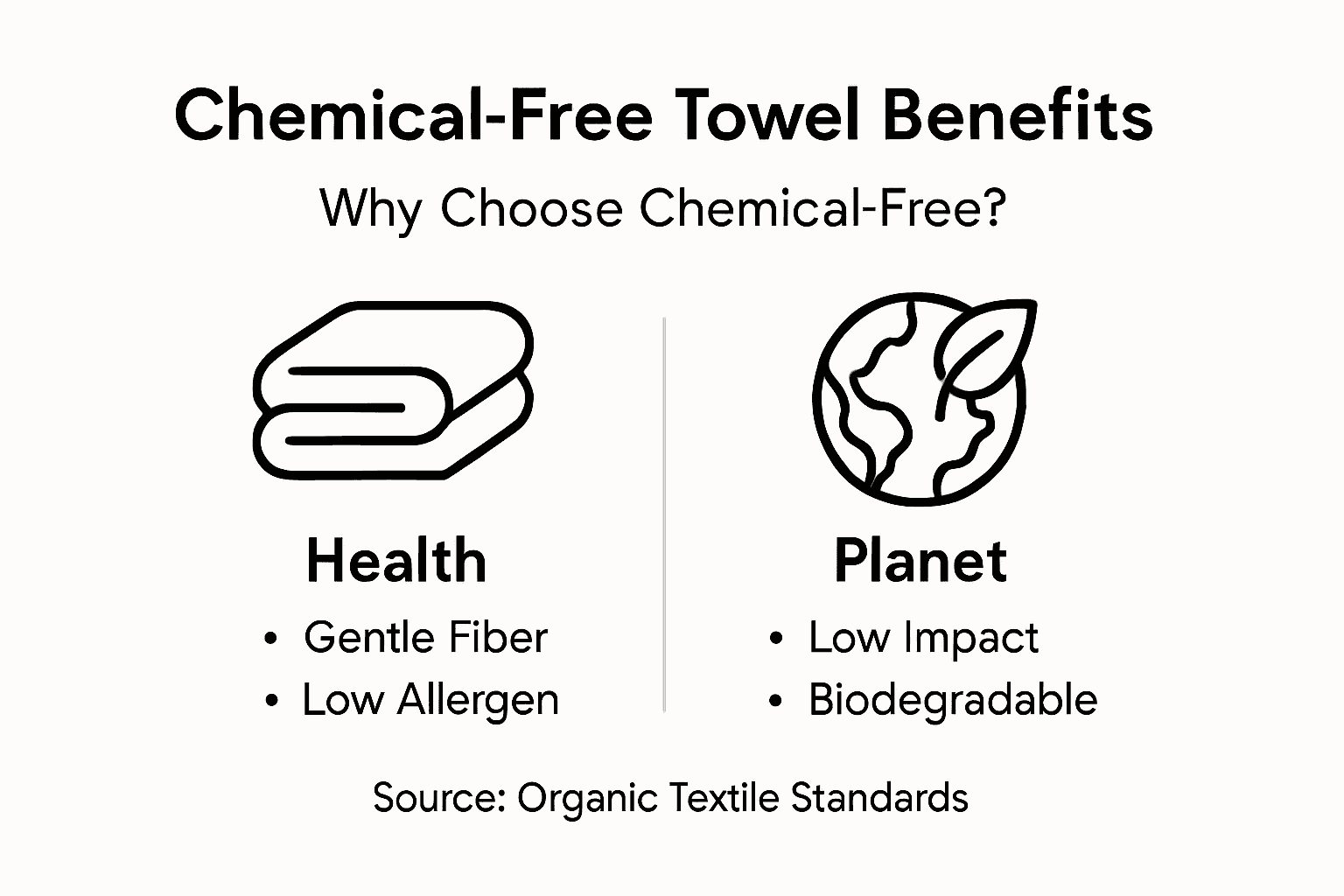
Beyond production, chemical-free towels offer remarkable end-of-life environmental benefits. Unlike conventional towels laden with synthetic chemicals, these textiles are often fully biodegradable and compostable. This characteristic means they can be safely returned to the earth, reducing landfill waste and preventing the release of harmful methane emissions. Natural fibers like organic cotton, bamboo, and hemp break down naturally, completing an environmentally conscious cycle that supports broader ecological sustainability efforts.
Pro tip: When disposing of chemical-free towels, consider composting them or checking local textile recycling programs to maximize their environmental benefits.
Below is a quick comparison of environmental impacts between chemical-free and conventional towels:
| Factor | Chemical-Free Towels | Conventional Towels |
|---|---|---|
| Pesticide Use | Minimal or organic only | Heavy conventional use |
| End-of-Life Disposal | Biodegradable, compostable | Often non-biodegradable |
| Water Consumption | Lower, with eco practices | Often high, less regulated |
| Chemical Pollution | Greatly reduced | High from processing |
| Carbon Footprint | Lower, with renewable energy | Typically higher |
How to Choose Quality Chemical Free Towels
Selecting the perfect chemical-free towel requires careful consideration of multiple factors that extend beyond simple aesthetic preferences. Organic towel selection demands comprehensive evaluation of materials, certifications, manufacturing processes, and performance characteristics that ensure both safety and quality.
When shopping for chemical-free towels, prioritize third-party certifications that validate the textile’s purity. Look specifically for GOTS (Global Organic Textile Standard) and MADE SAFE certifications, which rigorously verify the absence of harmful chemicals. Pay close attention to fiber composition, focusing on 100% organic cotton, bamboo, or hemp textiles. Two-ply towels with higher gram per square meter (GSM) ratings typically offer superior durability, softness, and absorbency, indicating a higher-quality product that will maintain its integrity through multiple wash cycles.
Beyond certifications, evaluate the towel’s practical characteristics. Consider factors like moisture-wicking capabilities, natural antimicrobial properties, and overall texture. Two-ply towels constructed from long-staple cotton fibers like Pima or Egyptian cotton provide exceptional softness without relying on synthetic chemical treatments. Avoid towels with synthetic finishes, bleach treatments, or unclear manufacturing processes. Transparent brands that share detailed information about their production methods and textile sourcing demonstrate a commitment to genuine chemical-free manufacturing.
Pro tip: Before purchasing, request a small sample or check the return policy to test the towel’s softness, absorbency, and potential skin reaction.
Experience the True Benefits of Chemical-Free Towels with Lotus Linen
The article highlights the importance of choosing towels free from harmful chemicals to protect sensitive skin and promote healthier living at home. Many people face skin irritation and environmental concerns due to synthetic treatments found in conventional towels. By opting for chemical-free textiles like organic cotton or bamboo, you gain softness, durability, and peace of mind knowing your towels are safe and eco-friendly. At Lotus Linen, we understand these challenges and share your commitment to comfort, safety, and sustainability with our range of premium, chemical-free towels and robes.
Discover the perfect blend of plush comfort and chemical-free quality by exploring our carefully crafted collection. Whether you seek natural fiber softness, superior moisture wicking, or hypoallergenic care, our customizable and elegant stone-wash and waffle robes complement your healthy lifestyle seamlessly.
Shop chemical-free comfort today. 
Start your journey to healthier living with Lotus Linen and choose carefully designed towels and robes that prioritize your skin’s well-being. Visit our site now to explore our premium robes and towels collection, because safe, luxurious comfort should never wait.
Frequently Asked Questions
What are chemical-free towels made of?
Chemical-free towels are primarily made from natural fibers, such as 100% organic cotton, bamboo, hemp, or flax. These materials are sourced and processed without the use of harsh chemicals, synthetic dyes, or bleaching agents.
What are the benefits of using chemical-free towels for sensitive skin?
Chemical-free towels provide significant benefits for individuals with sensitive skin by minimizing the risk of skin irritation and allergic reactions. They are free from synthetic chemicals and harsh treatments that can trigger dermatological issues, making them a safer option for conditions like eczema and psoriasis.
How can I identify high-quality chemical-free towels?
To identify high-quality chemical-free towels, look for third-party certifications like GOTS (Global Organic Textile Standard) or MADE SAFE, which validate the absence of harmful chemicals. Also, consider the fiber composition, such as long-staple cotton, and check the towel’s GSM for durability and absorbency.
What environmental benefits do chemical-free towels offer?
Chemical-free towels contribute to environmental sustainability by reducing pesticide use in production, being biodegradable or compostable, and lowering chemical pollution during manufacturing. They support a more eco-friendly lifecycle compared to conventional towels.
Recommended
- How to Choose Bath Towels: Selecting the Perfect Luxe Towels – Lotus Linen
- What Is Terry Cloth? Guide to Cozy, Stylish Choices 2025 – Lotus Linen
- Understanding Dye-Free Bath Towels: Comfort & Safety – Lotus Linen
- Best Personalized Robe Styles – Expert Comparison 2025 – Lotus Linen
- Organic Hair Conditioner: Everything You Need to Know | MyHair
- 7 Essential Eco-Friendly Beauty Tips for Natural Skincare – Didis Beauty Center

